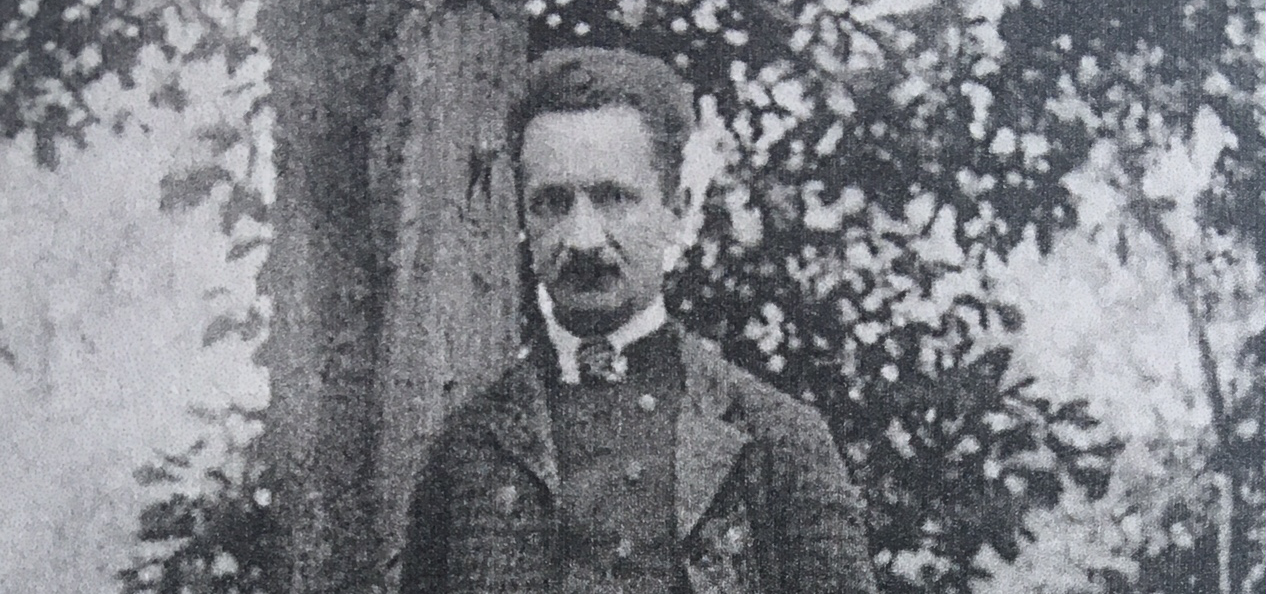
Spring 2026: Phl 820 – Being and Time

General information

Instructor

Here is more information about Prof. Lotz

Class Meetings

Days: Mondays
Time: 6-8:50pm
Place: SK 530

Office & Office Hours

Phone: 517.355.4490 [dept.])
Place: SK 503
Hours: Mondays, drop in, 3-5:45pm

Other Contact

E-mail: lotz@msu.edu
Home Phone: please ask
Webpage: http://christianlotz.info

Box

You will find my box in the front office of the philosophy department (SK 503)

Schedule (—tentative—)

Block I: Introduction

Jan 19, Introduction: Signposts
Meeting at ProfLotz’s house in Midland, 3:45pm; 4-7pm introductory seminar; dinner/drinks to follow
(Note: this is MLK day)

Jan 26, Hermeneutics, Phenomena, Method
Heidegger, Being and Time, sections 1-8

Feb 2, Being-in-the-world
Heidegger, Being and Time, sections 9-13

Feb 9, World
Heidegger, Being and Time, sections 14-24

Feb 16, They
Heidegger, Being and Time, sections 25-27

Feb 23, Thrownness, Understanding, Language
Heidegger, Being and Time, sections 28-38

Mar 9, Thrownness, Understanding, Language
Heidegger, Being and Time, sections 28-38

Mar 16, Care, Truth
Heidegger, Being and Time, sections 39-42, 44 [we jump over reality]

March 23, Being-towards-Death
Heidegger, Being and Time, sections 46-53

Mar 30, Conscience
Heidegger, Being and Time, sections 54-60

April 6, Resoluteness
Heidegger, Being and Time, sections 61-66

April 13, Temporality, Historicality
Heidegger, Being and Time, sections

April 20, Wrap Up
Wrap Up

Seminar Description

“One could not learn from him the kind of discussion that is common in philosophical circles – he spoke of “arguing around” with justifiable contempt – but only seeing. Therefore, one could not answer him with arguments, but only by giving him something to see.” (Carl Friedrich von Weizsäcker)

“I must say it once again: I have no teaching. I only point to something …I point to something in reality that had not or had too little been seen. I take him who listens to me by the hand and lead him to the window. I open the window and point to what is outside.” (Martin Buber)

As we know, the reception of Being and Time fills libraries. Countless commentaries, guidebooks, and introductions are available and help reading the book. Heidegger’s collected works comprise more than 100 volumes. At least 75 of these volumes are substantial contributions to philosophy and thinking. We are looking at a mountain.

In this seminar we will perform a close reading of Heidegger’s Being and Time. We will not approach the text through the vast amount of secondary literature. Instead, we will pay close attention to the primary text itself, as if we would be the text’s first readers 100 years ago. I would like to avoid treating the text as an object of scientific or historical inquiry, as if philosophical thinking is an object that needs to be made available for profit. Accordingly, instead of representing the text as something that is pre-conceived as an object of research, we will try to follow an ethics of reading, hopefully entering what is called the “hermeneutic circle.” The principle of the hermeneutic circle is simple: the correction and understanding of what is read can only be done through more (or different) understanding of the same. Put differently, the principle of what helps us understand “better” is not to be found outside of understanding (and interpretation). Understanding is not some kind of result of reading; it is the intelligibility that takes place “while” or “before” reading. Der Weg ist das ZielThe journey is the destination. Only in this way can we break through our desire of turning the text into an object for scientific procedures in order “to get something out of it.” The assumption that we need to get something out of a text is already the the result of what the later Heidegger calls “technology.”

Remember: the first readers of Being and Time were those who sat in Heidegger’s seminars in Marburg (and before 1933 in Freiburg): Among them were Arendt, Marcuse, Jonas, Tugendhat, Löwith, Gadamer, Klein, Anders, Strauss, Krüger, Levinas, Fink. Heidegger (and Husserl) also had a lot of visiting students from Japan (Kyoto School, Kitaro school). All of them did not have any commentaries and guidebooks when they approached Heidegger’s thinking.

I do hope that we can pay more attention to the 2nd part in which Heidegger analyzes wholeness, death, resoluteness, responsibility, conscience, time, and history. 

Note on Electronic Devices

Please avoid bringing electronic devices to class, unless these are necessary for accommodations (of any kind, no documentation necessary, please bring a flat device). Please avoid bringing laptops.

Course Goals

This course should make you familiar with one of the most prominent figures in 20th Century philosophy. It should enable you to understand the basic concepts developed in Being and Time.

Note I

This graduate seminar is not based on a set of fixed knowledge and, as such, is not based on a behavioral idea of education; rather, we will try to learn together and critically examine the material. The material is the absolute center of this class. Free floating discussions about things unrelated to the material are to be avoided.

Note II

For me graduate seminars are truly academic seminars; i.e., I conceive of them as genuine endeavors to ask genuine questions and to philosophically struggle with the goal of coming up with authentic responses. Truth and transparency are the guiding ideas and values. I cannot give a 101 introduction to the thinkers and issues discussed. We will begin in medias res. I will try to be as clear as possible, but if you are not willing to intensively study, then this seminar is not for you.

Orientation

There are hundreds of commentaries, introductions, companions, and guidebooks on the market. As I have a conservative approach to Heidegger’s thinking, I always preferred commentators who let the issues themselves speak (Gelven, Schürmann, Sheehan). I do not find the classical Anglo-American commentary by Dreyfus helpful because it is driven by the goal of revealing Heidegger as a pragmatist. Such a reading wants to demonstrate that an author is this or that or belongs to this or that camp of philosophy. A first time reader of a philosophical work does not know any of this. To be sure, help is needed, but this help does not need to be guided buy the question of whether one is an idealist, Marxist, biologist or something else.

If you need a good introduction that is geared towards Anglophone readers, check out William Blattner’s Heidegger’s ‘Being and Time’: A Reader’s Guide (Continuum). Daniel O. Dahlstrom is a very good, historically aware, writer on Heidegger. A good philosopher on space, place, etc. is Jeff Malpas. The best (and very readable) introductions to phenomenology come from Dermot Moran (there are chapters on Heidegger in those introductions). One of the best books in English on Husserl and Heidegger (that I have read) is Steven Crowell’s Husserl, Heidegger, and the Space of Meaning. Paths Toward Transcendental Phenomenology (Northwestern UP).

If you want to dig deeper into Being and Time and Heidegger, then you need to read texts that emerged in the historical context in which it was written: Husserl’s 6th Logical Investigation, Husserl’s Ideas I, Heidegger’s lecture courses in Marburg between 1923-1928, the 1927 book Kant and the Problem of Metaphysics, the exchange with Cassirer at Davos, the shorter pieces collected in Kisiel’s/Sheehan’s Becoming Heidegger. A simpler version of Being and Time (even if not all concepts are yet fully developed) is the 1925 lecture course History of the Concept of Time: Prolegomena.

Heidegger in Marburg (1923-1928)

  • 1923–1924 Introduction to Phenomenological Research. Trans. Daniel O. Dahlstrom. Bloomington: Indiana University Press, 2005.
  • 1924 Basic Concepts of Aristotelian Philosophy. Trans. Robert D. Metcalf and Mark B. Tanzer. Bloomington: Indiana University Press, 2009.
  • 1924–1925 Plato’s Sophist. Trans. Richard Rojcewicz and André Schuwer. Bloomington: Indiana University Press, 1997.
  • 1925 History of the Concept of Time: Prolegomena. Trans. Theodore Kisiel. Bloomington: Indiana University Press, 1992.
  • 1925–1926 Logic: The Question of Truth. Trans. Thomas Sheehan.Bloomington: Indiana University Press, 2010.
  • 1926 Basic Concepts of Ancient Philosophy. Trans. Richard Rojcewicz. Bloomington: Indiana University Press, 2008.
  • 1926-27 History of Philosophy from Thomas Aquinas to Kant [not yet translated]
  • 1927 The Basic Problems of Phenomenology. Trans. Albert Hofstadter. Rev. ed. Bloomington: Indiana University Press, 1988.
  • 1927–1928 Phenomenological Interpretation of Kant’s Critique of Pure Reason. Trans. Parvis Emad and Kenneth Maly. Bloomington: Indiana University Press, 1997.
  • 1928 The Metaphysical Foundations of Logic. Trans. Michael Heim. Bloomington: Indiana University Press, 1992.
  • 1929 [not a lecture course] Kant and the Problem of Metaphysics. Trans. Richard Taft. 5th ed. Bloomington: Indiana University Press, 1997 [includes the famous Heidegger/Cassirer debate at Davos]

Texts

Please get the older translation of Being and Time. For those of you who work in Continental philosophy and/or Heidegger, please also get the newer translation by Stambaugh. Both are available in paperback.

  • Being and Time, tr. Robinson & Macquarie (HarperCollins)
  • Being and Time. A Revised Edition of the Stambaugh Translation, Translated by Joan Stambaugh, Revised by & Foreword by Dennis J. Schmidt (SUNY Press)

Commentaries that stay close to the primary text:

  • Magda King, A Guide to Heidegger’s Being and Time (SUNY Press) [in connection with Stambaugh’s translation]
  • Michael Gelven, A Commentary On Heidegger’s “Being and Time” (Northern Illinois UP)
  • Thomas Sheehan, Heidegger’s Being and Time: Paraphrased and Annotated, Volume 1 (Rowman & Littlefield) [you can use this while reading BT]

Genesis of Being and Time:

  • Theodore Kisiel, The Genesis of Heidegger’s Being and Time (University of California Press)
  • John van Buren, The Young Heidegger. Rumor of the Hidden King (Indiana University Press)
  • Theodore Kisiel, Heidegger’s Way of Thought: Critical and Interpretive Signposts (Continuum) [collection of papers]

Heidegger before he was Heidegger

  • Theodore Kisiel, Thomas Sheehan (eds.), Becoming Heidegger: On the Trail of His Early Occasional Writings, 1910-1927 (Northwestern UP)
  • Martin Heidegger; John van Buren [editor], Supplements: From the Earliest Essays to Being and Time and Beyond (SUNY Press)

Heidegger as a Whole

  • William R. Richardson, Heidegger: Through Phenomenology to Thought  (Fordham UP)

Terms

  • Daniel O. Dahlstrohm, The Heidegger Dictionary (Bloomsbury)
  • Mark A. Wrathall (ed.), The Cambridge Heidegger Lexicon (Cambridge UP)

For Heidegger Snobs

  • Michael Inwood, A Heidegger Dictionary (Wiley-Blackwell) [goes deep into German]
  • Frank Schalow, Historical Dictionary of Heidegger’s Philosophy (Scarecrow Press)

Requirements

Course Requirements

  • 1 protocol, write-up, up to 900 words, take questions in class
  • 1 presentation & write-up, up to 900 words, 20-25 minutes, leading class discussion
  • Final paper, conference style, 3600 words
  • Regular participation, you are expected to attend every week, except in cases of reasonable excuses

Protocol

The class protocol should cover our discussion in class. Protocols should have a length of 2-3 pages (no more than 900 words), and they will in and outside of the classroom force us to have an ongoing reflection on our texts that we study for class. They can also include problems or questions that the writers had either with our class discussion or with the texts itself, but above all protocols should cover what I lectured about and what we discussed afterwards. Protocols should clarify and discuss selected issues in question. They can raise questions. Protocols have to be sent out to everyone by Sundays at noon. Everyone will read the protocols before class. Please avoid late turn ins. The student who wrote the protocol will address questions during the first 15-20 minutes of the next class meeting.

Presentation & Write-Up

Each student will be responsible for working out introductory presentations on one selected concept in Being and Time, which should function as a platform for our discussions. Please focus on the primary text; ask yourself how you can articulate the connections, what’s central, and and desired length of presentations: around 25 minutes. Please distribute a brief write-up/overview of what you will be talking about by Sunday at noon. Your write-up should have a length of 2-3 pages. A write-up differs from a handout (used during a presentation); i.e., the write-up should consists of a coherent text that either interprets, reflects on, or explains the primary material. Let’s call it a “miniature-paper” that everyone reads before class. Try to be as clear as possible and help everyone in class to understand the point from which you approach your topic, issue, text, or philosopher (in this case: sections!). Note: the reading material should be the absolute focus of your presentation; everyone will gain from hermeneutic virtues! Free floating discussions that are completely unrelated to the readings are to be avoided by all means.

General Remark

Given that this is a graduate seminar, I expect self-motivation, autonomy, civility, as well as self-responsibility. My seminars are completely open: you can always bring in your own positions, criticize others, or ask questions. There are no boundaries. My job is to think via clarifying thoughts of others. The attendance requires the willingness to intensively study the texts selected for class.

Final Paper

The class essay should be well researched and should present a substantial reflection on some parts of the material discussed in class. I expect excellent papers in regard to research, form, and content. The paper should be accompanied by an abstract of no more than 150 words. The paper should be “conference style,” i.e., it should have a length of around 12 (no more than 15) pages and, ideally, could be presented at a conference or be used as a seed manuscript for the summer scholar fellowship competition. This paper can also expository, but remember: a good expository paper is not to be confused with a summary of what you have read; rather, it reveals something about the issue that the text tries to address. It tries to help us understand the text better.

DFs

I will refuse giving DFs in this class, unless you find yourself in an emergency situation (health issues, etc.)

Course Evaluation

Assignments (traditional)

1 protocol + class discussionpass/fail, 10pts
1 oral presentation + write-uppass/fail, 10pts
final paper80 points
——–
   100 points
 

Grading

4.0 (=A)100 – 93
3.592 – 87
3 (=B)86 – 82
2.581 – 77
2 (=C)76 – 72
1.571 – 65
1.0 (=D)64 – 60
0.0< 60

GENERIC SYLLABUS (might not be applicable to each class)

Laptop/Cell Phone/Tablet Policy

You are not permitted to use laptops or cell phones in class, unless needed for medical reasons. Flat devices, such as tablets, are permitted  if you have purchased the literature required for class electronically. Please do not text under the table. Cell phones should be removed from tables. Failure to follow this policy will lead to unannounced assignments in class or loss of points (at the digression of the instructor).

Laptops in the Classroom

Class Attendance

As mentioned above, I do not employ in my classes a class attendance policy. Having said this, you should be aware that class attendance is very important. When engaging in a philosophical and humanistic dialogue it is necessary to be an active and present participant in the ongoing discussion. If you miss class please do not email me asking if you missed anything important. Every class is important. You should get a study buddy for the class; a student in class who will inform you of what you missed. If you miss a class you can come to my office hours or make an appointment to discuss the material, providing you have read the material and you simply want to see if your understanding of the material is on target. Time in office hours will not be used to repeat the class lectures.

Grading Criteria + Paper Writing Tips

Check out this page for grading criteria, example of assignments, etc.

Online Research Sources

Unfortunately, some people think that the internet as such is a reliable source of information. If you decide to use online sources for additional information or your paper then do not just use one of the common internet search engines, such as Google; rather, use reliable academic sources, such as Britannica Online, or the Stanford Encyclopedia of Philosophy. The Internet Ecyclopedia of Philosophy isn’t very good, but still acceptable. Check out MSU’s library resources! And, as with other sources, you must cite any online sources to which you refer in your essay.

Writing Center Information

MSU’s writing center offers excellent help on all matters regarding writing and learning. Check the website at http://writing.msu.edu for an overview and hours. For more information, please call 517.432.3610 or send an e-mail to writing@msu.edu.

Grief Absence Policy

I follow MSU’s general grief absence policy, which can be found here.

Integrity of Scholarship and Grades (Plagiarism)

The following statement of University policy addresses principles and procedures to be used in instances of academic dishonesty, violations of professional standards, and falsification of academic or admission records, herein after referred to as academic misconduct. [See General Student Regulation 1.00, Protection of Scholarship and Grades.]

Academic Honesty

Article 2.3.3 of the Academic Freedom Report states that “The student shares with the faculty the responsibility for maintaining the integrity of scholarship, grades, and professional standards.” In addition, the (insert name of unit offering course) adheres to the policies on academic honesty as specified in General Student Regulations 1.0, Protection of Scholarship and Grades; the all-University Policy on Integrity of Scholarship and Grades; and Ordinance 17.00, Examinations. (See Spartan Life: Student Handbook and Resource Guide and/or the MSU Web site: www.msu.edu) Therefore, unless authorized by your instructor, you are expected to complete all course assignments, including homework, lab work, quizzes, tests and exams, without assistance from any source. You are expected to develop original work for this course; therefore, you may not submit course work completed for another course to satisfy the requirements for this course. Students who violate MSU rules may receive a penalty grade, including but not limited to a failing grade on the assignment or in the course. Contact your instructor if you are unsure about the appropriateness of your course work. (See also https://www.msu.edu/~ombud/)

Plagiarism, from the Ombudsman’s page

Plagiarism (from the Latin plagiarius, an abductor, and plagiare, to steal) is defined by the White House Office of Science and Technology Policy on Misconduct in Research (take that!) as “ . . . the appropriation of another person’s ideas, processes, results or words without giving appropriate credit.”

Accidental or Unintentional
One may not even know that they are plagiarizing.  It is the student’s responsibility to make certain that they understand the difference between quoting and paraphrasing, as well as the proper way to cite material.

Blatant
Here, students are well aware that they are plagiarizing.  Purposefully using someone else’s ideas or work without proper acknowledgment is plagiarism.  This includes turning in borrowed or bought research papers as one’s own.

Self
Turning in the same term paper (or substantially the same paper) for two courses without getting permission from one’s instructor is plagiarism.

The Spartan Code of Honor

Student leaders have recognized the challenging task of discouraging plagiarism from the academic community. The Associated Students of Michigan State University (ASMSU) is proud to be launching the Spartan Code of Honor academic pledge, focused on valuing academic integrity and honest work ethics at Michigan State University. The pledge reads as follows:

“As a Spartan, I will strive to uphold values of the highest ethical standard. I will practice honesty in my work, foster honesty in my peers, and take pride in knowing that honor is worth more than grades. I will carry these values beyond my time as a student at Michigan State University, continuing the endeavor to build personal integrity in all that I do.”

The Spartan Code of Honor academic pledge embodies the principles of integrity that every Spartan is required to uphold in their time as a student, and beyond. The academic pledge was crafted with inspiration of existing individual college honor codes, establishing an overarching statement for the entire university. It was formally adopted by ASMSU on March 3, 2016, endorsed by Academic Governance on March 22, 2016, and recognized by the Provost, President, and Board of Trustees on April 15, 2016.

SIRS Evaluations

Michigan State University takes seriously the opinion of students in the evaluation of the effectiveness of instruction and has implemented the Student Instructional Rating System (SIRS) to gather student feedback (https://sirsonline.msu.edu). This course utilizes the online SIRS system, and you will receive an e-mail during the last two weeks of class asking you to fill out the SIRS web form at your convenience. In addition, participation in the online SIRS system involves grade sequestration, which means that the final grade for this course will not be accessible on STUINFO during the week following the submission of grades for this course unless the SIRS online form has been completed. Alternatively, you have the option on the SIRS website to decline to participate in the evaluation of the course. We hope, however, that you will be willing to give us your frank and constructive feedback so that we may instruct students even better in the future. If you access the online SIRS website and complete the online SIRS form or decline to participate, you will receive the final grade in this course as usual once final grades are submitted.

Social Media and Sharing of Course Materials

As members of a learning community, students are expected to respect the intellectual property of course instructors. All course materials presented to students are the copyrighted property of the course instructor and are subject to the following conditions of use:

  • Students may record lectures or any other classroom activities and use the recordings only for their own course-related purposes.
  • Students may share the recordings with other students enrolled in the class. Sharing is limited to using the recordings only for their own course-related purposes.
  • Students may post the recordings or other course materials online or distribute them to anyone not enrolled in the class with the advance written permission of the course instructor and, if applicable, any students whose voice or image is included in the recordings.
  • Any student violating the conditions described above may face academic disciplinary sanctions.

Mandatory Reporting

Michigan State University is committed to fostering a culture of caring and respect that is free of relationship violence and sexual misconduct, and to ensuring that all affected individuals have access to services.  For information on reporting options, confidential advocacy and support resources, university policies and procedures, or how to make a difference on campus, visit the Title IX website at civilrights.msu.edu.

Limits to confidentiality.  Essays, journals, and other materials submitted for this class are generally considered confidential pursuant to the University’s student record policies.  However, students should be aware that University employees, including instructors, may not be able to maintain confidentiality when it conflicts with their responsibility to report certain issues to protect the health and safety of MSU community members and others.  As the instructor, I must report the following information to other University offices (including the Department of Police and Public Safety) if you share it with me:

  • Suspected child abuse/neglect, even if this maltreatment happened when you were a child;
  • Allegations of sexual assault, relationship violence, stalking, or sexual harassment; and
  • Credible threats of harm to oneself or to others.

These reports may trigger contact from a campus official who will want to talk with you about the incident that you have shared.  In almost all cases, it will be your decision whether you wish to speak with that individual.  If you would like to talk about these events in a more confidential setting, you are encouraged to make an appointment with the MSU Counseling and Psychiatric Services.

Student Support Program (SSP)

Michigan State University is offering all MSU students access to counseling support 24/7/365 through My SSP: Student Support Program. My SSP is free to all MSU students. My SSP is confidential, and can help with:

  • Adapting to new challenges
  • Being successful at school
  • Relationships with friends and family
  • Practical issues with studying
  • Stress, sadness, loneliness, and more

The My SSP professional counselors are available to help anytime, anywhere with:

  • Immediate support by phone and chat
  • Ongoing support by appointment via phone and video
  • In addition, culturally relevant support is available in the language of the caller’s choice.

There are multiple options for connecting with a My SSP counselor:

  • Download the free My SSP app on Google Play or iTunes
  • Chat online at http://us.myissp.com
  • Call 1-866-743-7732
  • From outside North America, call 001.416.380.657

Accommodations for Students with Disabilities

Students with disabilities should contact the Resource Center for Persons with Disabilities to establish reasonable accommodations. For an appointment with a counselor, call 353-9642 (voice) or 355-1293 (TTY)

Drops and Adds

The last day to add this course is the end of the first week of classes. The last day to drop this course with a 100 percent refund and no grade reported is (see Academic Calendar). The last day to drop this course with no refund and no grade reported is (see Academic Calendar). You should immediately make a copy of your amended schedule to verify you have added or dropped this course.

Note on Attendance

Students who fail to attend the first four class sessions or class by the fifth day of the semester, whichever occurs first, may be dropped from the course.
Spring 2025: Phl 355 – Philosophy of Technology

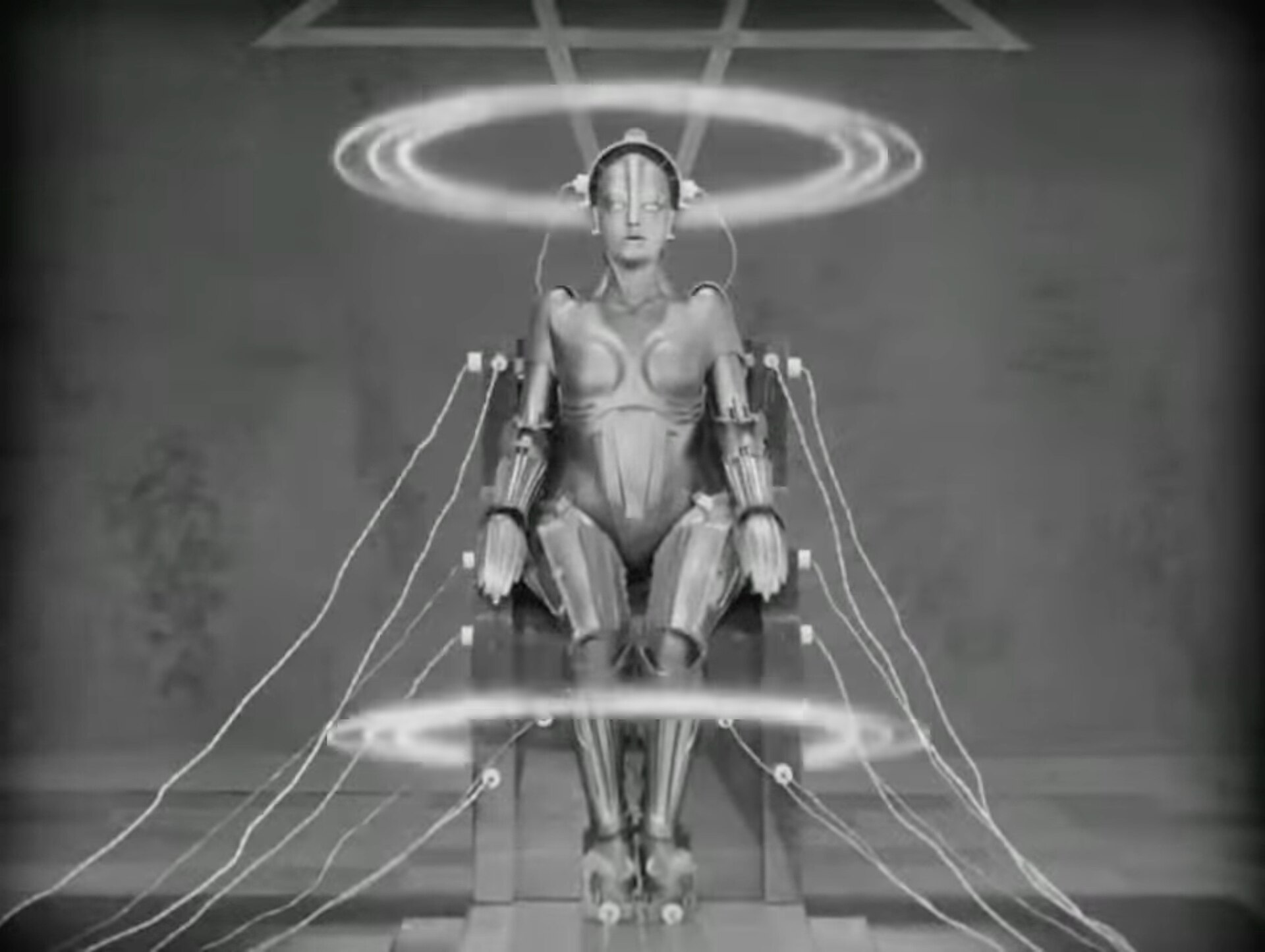
Maschinenmensch, Still, Metropolis (film, 1927)

General information

Instructor

Here is more information about ProfLotz

Class Meetings

Days: MW
Time: 12:40 AM – 2:30 PM
Place: Snyder Hall C302

Office

Phone: 517.355.4490 [dept.])
Place: 503 South Kedzie Hall
Hours: M, 3-5:30pm

Other Contact

E-mail: lotz@msu.edu
Home Phone: please ask
Webpage: http://christianlotz.info

Box

You will find my box in the front office of the philosophy department (SK 503)

Schedule

Introduction

Jan 15, Introduction

Jan 20, MLK Day
No class

Section I: Technology & Philosophical Anthropology & History

Jan 22, Technology as Process
Jonas, Towards a Philosophy of Technology

Jan 27, Technology as Process
Jonas, Towards a Philosophy of Technology

Jan 29, Technology & The Human
Gehlen, Man and Technique

Feb 3, History of Philosophy & Technology
Blumenberg, The Relationship between Nature and Technology as a Philosophical Problem

Feb 5, History of Philosophy & Technology
Blumenberg, The Relationship between Nature and Technology as a Philosophical Problem

Feb 10, Cyborgs
Haraway, A Manifesto for Cyborgs: Science, Technology, and Socialist Feminism in the 1980s

Section II: Technology & Society

Feb 12, Technology and Capital
Marx, Communist Manifesto, Sections 1&2
https://www.marxists.org/archive/marx/works/1848/communist-manifesto/

Feb 17, Machinery and Labor
Marx, Capital, chapter 15, sections 1-4

Feb 19, Technology as Relation
Harvey, What Technology Reveals (Commentary on Marx)

Feb 24, Technology and Social Domination
Marcuse, Some Social Implications of Modern Technology

Mar 3, Break
No class

Mar 5, Break
No class

Mar 10, Technology and Ideology
Habermas, Science and Technology as Ideology

Mar 12, Technolgy and Design Bias
Feenberg, The Bias of Technology

Session IV: Technology & Metaphysics

Mar 17, Technology as Enframing
Heidegger, The Question Concerning Technology

Mar 19, Technology as Enframing
Heidegger, The Question Concerning Technology

Mar 24, Technology as Enframing
Heidegger, The Question Concerning Technology
Packer/Reeves, Killer Apps, excerpt

Section III: Technology & Modern Life

Mar 26, The Device Paradigm
Borgmann, Technology and the Character of Contemporary Life, sections 8-12

Apr 2, Technology and Social Order
Borgmann, Technology and the Character of Contemporary Life, sections 13-16

Apr 7, The Reform of Technology
Borgmann, Technology and the Character of Contemporary Life, sections 17-19

Apr 14, Focal Things and Practices
Borgmann, Technology and the Character of Contemporary Life, section 20 & 22-23

Apr 16, Focal Things and Practices
Borgmann, Technology and the Character of Contemporary Life, section 20 & 22-23

Apr 21, Wrap Up

Apr 23, Wrap Up

Final Paper Due
Monday, April 28 12:40pm via D2L

Course Description

“The quantification of nature, which led to its explication in terms of mathematical structures, separated reality from all inherent ends and, consequently, separated the true from the good, science from ethics” (Marcuse).

In this reading-intense seminar we will read central texts in philosophy of technology. We will read and discuss classical texts and theories – and won’t deal with a lot of contemporary topics and issues. The class will be divided into three sections: technology and philosophical anthropology, technology and society, technology and metaphysics. In addition, we will read an important text by the most important US philosopher on technology, Albert Borgmann.

Note

This is a 300-level course in philosophy and, as such, contains difficult material and requires mature students. If you are not willing to study dense written material, listen to unusual lectures, and discuss ideas in an organized fashion, then you should not take this class. This class can be taken by students without prior knowledge in philosophy, but you should not take this class if you are not an avid reader. If you believe that AI can replace your reading and thinking, then drop this class.

Course Goals

This class should students introduce to

  • central issues in the philosophy of technology
  • how to read major figures of philosophy
  • how to think beyond a naturalistically and scientifically reduced world view
  • how to think critically about general conceptions of technology
  • realize how ridiculous it is to identify technology as a set of gadgets

Note

Students should be aware of the fact that this course is based on difficult texts. Accordingly, this class requires self-responsible learners and an intense confrontation with the primary text. Accordingly, if you are not excited about the prospect of a daily confrontation with abstract and historical reflections, then you should not take this class. This class is not based on a set of fixed knowledge and, as such, is not based on a behavioral idea of education; rather, we will try to learn together and critically examine the material. The instructor of this class does not have anything to teach, and a lot to learn.

Required Texts

  • all texts will be posted on D2L
  • I recommend getting the Borgmann book on paper
  • If you are a philosophy minor or major, get Heidegger’s Basic Writings and Marcuse’s One Dimensional Man on paper

There is no need for electronic devices in this class. All we do is to read and to think. For that Apple and Microsoft are not necessary. In fact, they stand in the way of thinking. Research has shown that reading comprehension tends to improve when done with paper copies. Research has also shown that taking notes on electronic devices is unproductive.

Accordingly, I recommend printing the material out and bringing it to class.

Course Requirements

  • Daily reading and studying
  • Participation in class
  • 5 class response sheets
  • 1 final essay assignment
  • 10 Monday reading quizzes

Note

The class and my lectures are solely based on the texts selected for class and require a thorough study and preparation of the material. I will primarily lecture on the readings, which will help you to more fully understand the texts. Therefore it is not sufficient for students to come to class without having prepared the texts. And indeed, in the assignments you have to demonstrate whether you have appropriately prepared the readings selected for each lecture.

Note

Every academic misconduct, such as plagiarism, will – without exception – lead to a failing grade in class. The usage of AI for writing papers is not permitted. Check the Ombudsman’s page (see also note below on plagiarism):  https://www.msu.edu/~ombud/

Attendance

To get a good grade in this class, regular attendance is required. I will not call roll. Hence, it is up to you to come to class or not. However, if you do not come to class on a regular basis and participate in the class discussion, it is impossible for you to achieve a good grade in this class; so coming to class is your responsibility and your call. If you choose to attend class, please come on time, turn off cell phones and other electronic devices that interfere with your (and others’) concentration, have the reading prepared and be ready to participate. If you are not prepared, do not bother showing up. It is a sign of disrespect to your peers and the instructor to attend class unprepared. If you miss class, it is your responsibility to obtain class notes from a fellow student and to catch up on reading. Nevertheless, please be aware that you should not make me responsible for a failure that results out of your decision. You should be aware that chances to master this class are minimal, if you do not show up for class or if you do not prepare the readings (=studying).

Cell Phone Policy

Please completely remove your cell phones from tables when class begins. Please do not text under the table. Failure to follow this policy will lead to a lower grade (at the digression of the instructor).

Assignments

Class Response Sheets

Every student is asked to submit 5 class response sheets during the semester. You decide when you’d like to turn in a response sheet. Response sheets must be submitted to D2L by the end of the day of the selected class. Late submissions will not be accepted. Please use the folllwing form for all 5 of your responses.

Download response sheet

Final Assignment

There will be a final take-home exam or final paper (1800 words).

In-Class Assignments

There will be unannounced, spontaneous, group assignments in class. Students wo miss class will lose the points for the assignment.

Reading Quizzes

There will be a reading quiz in class on ten Mondays. Two quizzes will be dropped (this includes possible dates on which I wave the reading quiz). If you miss more than 2 Mondays, you will lose points.

Make-Up Assignments

Students who need to miss assignments for excusable reasons, such as a death in their families, MSU related business, emergency weather conditions, or medical reasons, must inform me, and will be permitted to make up assignments.

Course Evaluation

Assignments

Final paper / Final Take-Home20 points
Participation15 points
5 class response sheets20 points
Reading quizzes20 points
In-class assignments25 points
 ——–
  100 points
  

Grading

4.0 (=A)100 – 93
3.592 – 87
3 (=B)86 – 82
2.581 – 77
2 (=C)76 – 72
1.571 – 65
1.0 (=D)64 – 60
0.0< 60

GENERIC SYLLABUS (might not be applicable to each class)

Laptop/Cell Phone/Tablet Policy

You are not permitted to use laptops or cell phones in class, unless needed for medical reasons. In this case you need to bring a RCPD document. Please do not text under the table. Cell phones should be removed from tables. Failure to follow this policy will lead to unannounced assignments in class or loss of points (at the digression of the instructor).

Class Attendance

As mentioned above, I do not employ in my classes a class attendance policy. Having said this, you should be aware that class attendance is very important. When engaging in a philosophical and humanistic dialogue it is necessary to be an active and present participant in the ongoing discussion. If you miss class please do not email me asking if you missed anything important. Every class is important. You should get a study buddy for the class; a student in class who will inform you of what you missed. If you miss a class you can come to my office hours or make an appointment to discuss the material, providing you have read the material and you simply want to see if your understanding of the material is on target. Time in office hours will not be used to repeat the class lectures.

Grading Criteria + Paper Writing Tips

Check out this page for grading criteria, example of assignments, etc.

Online Research Sources

Unfortunately, some people think that the internet as such is a reliable source of information. If you decide to use online sources for additional information or your paper then do not just use one of the common internet search engines, such as Google; rather, use reliable academic sources, such as Britannica Online, or the Stanford Encyclopedia of Philosophy. The Internet Ecyclopedia of Philosophy isn’t very good, but still acceptable. Check out MSU’s library resources! And, as with other sources, you must cite any online sources to which you refer in your essay.

Writing Center Information

MSU’s writing center offers excellent help on all matters regarding writing and learning. Check the website at http://writing.msu.edu for an overview and hours. For more information, please call 517.432.3610 or send an e-mail to writing@msu.edu.

Grief Absence Policy

I follow MSU’s general grief absence policy, which can be found here.

Integrity of Scholarship and Grades (Plagiarism)

The following statement of University policy addresses principles and procedures to be used in instances of academic dishonesty, violations of professional standards, and falsification of academic or admission records, herein after referred to as academic misconduct. [See General Student Regulation 1.00, Protection of Scholarship and Grades.]

Academic Honesty

Article 2.3.3 of the Academic Freedom Report states that “The student shares with the faculty the responsibility for maintaining the integrity of scholarship, grades, and professional standards.” In addition, the (insert name of unit offering course) adheres to the policies on academic honesty as specified in General Student Regulations 1.0, Protection of Scholarship and Grades; the all-University Policy on Integrity of Scholarship and Grades; and Ordinance 17.00, Examinations. (See Spartan Life: Student Handbook and Resource Guide and/or the MSU Web site: www.msu.edu) Therefore, unless authorized by your instructor, you are expected to complete all course assignments, including homework, lab work, quizzes, tests and exams, without assistance from any source. You are expected to develop original work for this course; therefore, you may not submit course work completed for another course to satisfy the requirements for this course. Students who violate MSU rules may receive a penalty grade, including but not limited to a failing grade on the assignment or in the course. Contact your instructor if you are unsure about the appropriateness of your course work. (See also https://www.msu.edu/~ombud/)

Plagiarism, from the Ombudsman’s page

Plagiarism (from the Latin plagiarius, an abductor, and plagiare, to steal) is defined by the White House Office of Science and Technology Policy on Misconduct in Research (take that!) as “ . . . the appropriation of another person’s ideas, processes, results or words without giving appropriate credit.”

Accidental or Unintentional
One may not even know that they are plagiarizing.  It is the student’s responsibility to make certain that they understand the difference between quoting and paraphrasing, as well as the proper way to cite material.

Blatant
Here, students are well aware that they are plagiarizing.  Purposefully using someone else’s ideas or work without proper acknowledgment is plagiarism.  This includes turning in borrowed or bought research papers as one’s own.

Self
Turning in the same term paper (or substantially the same paper) for two courses without getting permission from one’s instructor is plagiarism.

The Spartan Code of Honor

Student leaders have recognized the challenging task of discouraging plagiarism from the academic community. The Associated Students of Michigan State University (ASMSU) is proud to be launching the Spartan Code of Honor academic pledge, focused on valuing academic integrity and honest work ethics at Michigan State University. The pledge reads as follows:

“As a Spartan, I will strive to uphold values of the highest ethical standard. I will practice honesty in my work, foster honesty in my peers, and take pride in knowing that honor is worth more than grades. I will carry these values beyond my time as a student at Michigan State University, continuing the endeavor to build personal integrity in all that I do.”

The Spartan Code of Honor academic pledge embodies the principles of integrity that every Spartan is required to uphold in their time as a student, and beyond. The academic pledge was crafted with inspiration of existing individual college honor codes, establishing an overarching statement for the entire university. It was formally adopted by ASMSU on March 3, 2016, endorsed by Academic Governance on March 22, 2016, and recognized by the Provost, President, and Board of Trustees on April 15, 2016.

SIRS Evaluations

Michigan State University takes seriously the opinion of students in the evaluation of the effectiveness of instruction and has implemented the Student Instructional Rating System (SIRS) to gather student feedback (https://sirsonline.msu.edu). This course utilizes the online SIRS system, and you will receive an e-mail during the last two weeks of class asking you to fill out the SIRS web form at your convenience. In addition, participation in the online SIRS system involves grade sequestration, which means that the final grade for this course will not be accessible on STUINFO during the week following the submission of grades for this course unless the SIRS online form has been completed. Alternatively, you have the option on the SIRS website to decline to participate in the evaluation of the course. We hope, however, that you will be willing to give us your frank and constructive feedback so that we may instruct students even better in the future. If you access the online SIRS website and complete the online SIRS form or decline to participate, you will receive the final grade in this course as usual once final grades are submitted.

Social Media and Sharing of Course Materials

As members of a learning community, students are expected to respect the intellectual property of course instructors. All course materials presented to students are the copyrighted property of the course instructor and are subject to the following conditions of use:

  1. Students may record lectures or any other classroom activities and use the recordings only for their own course-related purposes.
  2. Students may share the recordings with other students enrolled in the class. Sharing is limited to using the recordings only for their own course-related purposes.
  3. Students may post the recordings or other course materials online or distribute them to anyone not enrolled in the class with the advance written permission of the course instructor and, if applicable, any students whose voice or image is included in the recordings.
  4. Any student violating the conditions described above may face academic disciplinary sanctions.

Student Support Program (SSP)

Michigan State University is offering all MSU students access to counseling support 24/7/365 through My SSP: Student Support Program. My SSP is free to all MSU students. My SSP is confidential, and can help with:

  • Adapting to new challenges
  • Being successful at school
  • Relationships with friends and family
  • Practical issues with studying
  • Stress, sadness, loneliness, and more

The My SSP professional counselors are available to help anytime, anywhere with:

  • Immediate support by phone and chat
  • Ongoing support by appointment via phone and video
  • In addition, culturally relevant support is available in the language of the caller’s choice.

There are multiple options for connecting with a My SSP counselor:

  • Download the free My SSP app on Google Play or iTunes
  • Chat online at http://us.myissp.com
  • Call 1-866-743-7732
  • From outside North America, call 001.416.380.657

Accommodations for Students with Disabilities

Students with disabilities should contact the Resource Center for Persons with Disabilities to establish reasonable accommodations. For an appointment with a counselor, call 353-9642 (voice) or 355-1293 (TTY)

Drops and Adds

The last day to add this course is the end of the first week of classes. The last day to drop this course with a 100 percent refund and no grade reported is (see Academic Calendar). The last day to drop this course with no refund and no grade reported is (see Academic Calendar). You should immediately make a copy of your amended schedule to verify you have added or dropped this course.

Note on Attendance

Students who fail to attend the first four class sessions or class by the fifth day of the semester, whichever occurs first, may be dropped from the course.

Spring 2025: Phl 850 – Politics of Exception. Schmitt vs. Arendt

General information

Instructor

Here is more information about Prof. Lotz

Class Meetings

Days: Mondays
Time: 6-8:50pm
Place: SK 530

Office & Office Hours

Phone: 517.355.4490 [dept.])
Place: SK 503
Hours: Mondays, drop in, 3-5:45pm

Other Contact

E-mail: lotz@msu.edu
Home Phone: please ask
Webpage: http://christianlotz.info

Box

You will find my box in the front office of the philosophy department (SK 503)

Schedule (—tentative—)

Block I: Schmitt

Jan 20, Introduction: Against Politics as Technology
Schmitt, The Age of Neutralizations and Depoliticizations (in the expanded edition of The Concept of the Political)
Arendt, The Human Condition, Prologue & sections 35+45
Meier, The Concept of the Poltical

Voluntary:
Schmitt, Roman Catholicism and Political Form [focus in your reading on the juxtaposition between what Schmitt conceives of as “Catholicism” and technological rationality.]

Meeting at ProfLotz’s place in Midland, 4pm

Jan 27, Critique of Liberalism
Schmitt, The Crisis of Parliamentary Democracy

Feb 3, The Political
Schmitt, The Concept of the Political, section 1-4

Feb 10, The Political
Schmitt, The Concept of the Political; sections 5-

Feb 17, Sovereignty
Schmitt, Political Theology I
Agamben, The State of Exception, chapter 1&2

Feb 24, The Political
Arendt, The Human Condition, section II: The Public and the Private Realm
Arendt, Introduction to Politics, In: The Promise of Politics, first half, pp. 93-135

Mar 10, Political Freedom & Non-Sovereignty
Arendt, Freedom and Politics
Arendt, What is Freedom?
Arendt, The Freedom to be Free. The Meaning of Revolution

Mar 17, Labor
Arendt, The Human Condition, section III: Labor

March 24, World
Arendt, The Human Condition, section IV: Work

April 7, History
Arendt, The Human Condition, section V: Action

April 18-20
Retreat, topic tbd

Seminar Description

“No theoretical consideration can replace political experience” (Arendt,TWP, 140)

In this seminar we will read basic texts in political philosophy. The distinction between the political and politics has increasingly become important in recent debates in European political philosophy. Both Schmitt and Arendt approach the political realm, the being of the political, as a phenomenological, existential, and ontological question – and that’s precisely what interests me because I would like to maintain a distinction, on the one hand, between social and political philosophy, and, on the other hand, between ethics and political philosophy. Critical Theory tends to sublate all political question in social theory, Foucauldians sublate everything in a diffuse concept of power, and Marxism (such as Lukács) and current “activisms” sublate the social to praxis. I do not find any of these positions convincing.

Despite the ontological angle, both Schmitt and Arendt are closely associated with political experience and the attempt to philosophize about the political from a historically specific point in time, that is, from Weimar Germany, Nazi Germany, and the global outlook after WWII. I assume that the latter is still our own horizon. In fact, I think that both Schmitt’s concept of exception and Arendt’s concept of non-sovereignty can help understand existing tensions in our own political landscape.

Both Arendt and Schmitt develop their thoughts in distance to liberalism. Both argue that modern technocratic and capitalist society will lead to the destruction of freedom. They disliked the Frankfurt School. Both rejected academic style writings. Both are, in their own way, charismatic intellectuals. Both did not think of themselves as philosophers.

As we know, the biographical background of those two individuals could not be further apart (though historically they are close): whereas Schmitt decided to throw himself into the hands of Nazi power and Nazi ideology (and never abandoned his antisemitism), Arendt had to escape from Nazi Germany. Whereas Schmitt “operated in hiddenness” from his house that he named “Casa San Casciano” in Sauerland, Arendt lived on 370 Riverside Drive in New York City. Whereas Arendt became one of the defining public intellectual figures for both the US and Germany after WWII, Schmitt became influential through private meetings with his students and other intellectuals who discussed with him issues through silence. However we stand morally regarding Schmitt, he has triggered a massive amount of academic scholarship, and his writings captivate a lot of contemporary attention (just to see the top of the iceberg, check https://www.carl-schmitt.de/en/research-2/literature-on-carl-schmitt/). This is even more evident in Arendt’s case: in recent decades the reception of her writings has reached industrial dimensions. My suspicion is that this nervous uptick in the reception of both figures and their ideas is due to our own intellectual disorientation.

We cannot discuss the entirety of their philosophies and theories. We need to find the healthy mean between too much reading and reasonable comprehension. I decided to leave a possibly exciting confrontation of Schmitt’s Nomos of the Earth and Arendt’s The Origins of Totalitarianism (including Cesaire’s On Colonialism) aside. Instead, we will focus on basic political concepts. Axis i: sovereignty; axis ii: constituting power (exception); axis iii: the political realm; axis iv: conflict; axis v: liberalism/technocratic rationality.

Course Goals

This course should make you familiar with two of the most prominent figures in political philosophy in the Continental/European tradition. It should enable you to address basic questions of political philosophy through their lenses.

Note I

This graduate seminar is not based on a set of fixed knowledge and, as such, is not based on a behavioral idea of education; rather, we will try to learn together and critically examine the material. The material is the absolute center of this class. Free floating discussions about things unrelated to the material are to be avoided.

Note II

For me graduate seminars are truly academic seminars; i.e., I conceive of them as genuine endeavors to ask genuine questions and to philosophically struggle with the goal of coming up with authentic responses. Truth and transparency are the guiding ideas and values. I cannot give a 101 introduction to the thinkers and issues discussed. We will begin in medias res. I will try to be as clear as possible, but if you are not willing to intensively read, then this seminar will be a challenge to you.

Orientation

  • Kalyvas, Democracy and the Politics of the Extraordinary: Max Weber, Carl Schmitt, Hannah Arendt (Cambridge University Press, 2008)
  • The Oxford Handbook to Carl Schmitt, eds. Jens Meierhenrich, Oliver Simons (Oxford University Press, 2017)
  • Plaetzer, Eichmann in Plettenberg: Carl Schmitt reads Hannah Arendt, Modern Intellectual History; Cambridge Vol. 20, Iss. 1,  (Mar 2023): 270-297
  • Scheuermann, Erwin, Revolutions and Constitutions: Hannah Arendt’s Challenge to Carl Schmitt, in: Law as Politics:Carl Schmitt’s Critique of Liberalism, ed. David Dyzenhaus (Duke University Press 1998)
  • Suuronen, V., Carl Schmitt’s Confrontation with the Work of Hannah Arendt: A Debate on Totalitarianism, Power, and Banality of Evil. Global Intellectual History8(3), 2022, 270–305.
  • Isseroff, Judah, High Heels as Hammers: Hannah Arendt’s Critique of Carl Schmitt’s Political Theological Analogy,  Religions, Vol. 14, Iss. 10, 2023, 1261
  • Kalyvas, Andreas, “From the Act to the Decision. Hannah Arendt and the Question of Decisionism,” Political Theory, 32/3, 2004, 320-346.

Texts

Please get in paperback

  • Schmitt, The Concept of the Political
  • Arendt, The Human Condition

If you have the cash, also get

  • Schmitt, The Crisis of Parliamentary Democracy
  • Schmitt, Political Theology
  • Arendt, Thinking without a Banister. Essays in Understanding, 1953-1975 (ed. Kohn)

Requirements

Course Requirements

  • 1 protocol, write-up, up to 900 words, take questions in class
  • 1 presentation & write-up, up to 900 words, 20-25 minutes, leading class discussion
  • Final paper, conference style, 3600-4500 words
  • Regular participation, you are expected to attend every week, except in cases of reasonable excuses

Protocol

The class protocol should cover our discussion in class. Protocols should have a length of 2-3 pages (no more than 900 words), and they will in and outside of the classroom force us to have an ongoing reflection on our texts that we study for class. They can also include problems or questions that the writers had either with our class discussion or with the texts itself, but above all protocols should cover what I lectured about and what we discussed afterwards. Protocols should clarify and discuss selected issues in question. They can raise questions. Protocols have to be sent out to everyone by Sundays at noon. Everyone will read the protocols before class. Please avoid late turn ins. The student who wrote the protocol will address questions during the first 15-20 minutes of the next class meeting.

Presentation & Write-Up

Each student will be responsible for working out introductory presentations, which should function as a platform for our discussions. Please focus on selected aspects of the readings; desired length of presentations: around 25 minutes. Please distribute a brief write-up/overview of what you will be talking about by Sunday at noon. Your write-up should have a length of 2-3 pages. A write-up differs from a handout (used during a presentation); i.e., the write-up should consists of a coherent text that either interprets, reflects on, or explains the primary material. Let’s call it a “miniature-paper” that everyone reads before class. Try to be as clear as possible and help everyone in class to understand the point from which you approach your topic, issue, text, or philosopher. Note: the reading material should be the absolute focus of your presentation; everyone will gain from hermeneutic virtues! Free floating discussions that are completely unrelated to the readings are to be avoided by all means.

General Remark

Given that this is a graduate seminar, I expect self-motivation, autonomy, civility, as well as self-responsibility. My seminars are completely open: you can always bring in your own positions, criticize others, or ask questions. There are no boundaries. My job is to think via clarifying thoughts of others. The attendance requires the willingness to intensively study the texts selected for class.

Final Paper

The class essay should be well researched and should present a substantial reflection on some parts of the material discussed in class. I expect excellent papers in regard to research, form, and content. The paper should be accompanied by an abstract of no more than 150 words. The paper should be “conference style,” i.e., it should have a length of around 12-15 pages and, ideally, could be presented at a conference or be used as a seed manuscript for the summer scholar fellowship competition.

DFs

I will refuse giving DFs in this class, unless you find yourself in an emergency situation (health issues, etc.)

Course Evaluation

Assignments (traditional)

1 protocol + class discussionpass/fail, 10pts
1 oral presentation + write-uppass/fail, 10pts
final paper80 points
——–
   100 points
 

Grading

4.0 (=A)100 – 93
3.592 – 87
3 (=B)86 – 82
2.581 – 77
2 (=C)76 – 72
1.571 – 65
1.0 (=D)64 – 60
0.0< 60

GENERIC SYLLABUS (might not be applicable to each class)

Laptop/Cell Phone/Tablet Policy

You are not permitted to use laptops or cell phones in class, unless needed for medical reasons. Flat devices, such as tablets, are permitted  if you have purchased the literature required for class electronically. Please do not text under the table. Cell phones should be removed from tables. Failure to follow this policy will lead to unannounced assignments in class or loss of points (at the digression of the instructor).

Laptops in the Classroom

Class Attendance

As mentioned above, I do not employ in my classes a class attendance policy. Having said this, you should be aware that class attendance is very important. When engaging in a philosophical and humanistic dialogue it is necessary to be an active and present participant in the ongoing discussion. If you miss class please do not email me asking if you missed anything important. Every class is important. You should get a study buddy for the class; a student in class who will inform you of what you missed. If you miss a class you can come to my office hours or make an appointment to discuss the material, providing you have read the material and you simply want to see if your understanding of the material is on target. Time in office hours will not be used to repeat the class lectures.

Grading Criteria + Paper Writing Tips

Check out this page for grading criteria, example of assignments, etc.

Online Research Sources

Unfortunately, some people think that the internet as such is a reliable source of information. If you decide to use online sources for additional information or your paper then do not just use one of the common internet search engines, such as Google; rather, use reliable academic sources, such as Britannica Online, or the Stanford Encyclopedia of Philosophy. The Internet Ecyclopedia of Philosophy isn’t very good, but still acceptable. Check out MSU’s library resources! And, as with other sources, you must cite any online sources to which you refer in your essay.

Writing Center Information

MSU’s writing center offers excellent help on all matters regarding writing and learning. Check the website at http://writing.msu.edu for an overview and hours. For more information, please call 517.432.3610 or send an e-mail to writing@msu.edu.

Grief Absence Policy

I follow MSU’s general grief absence policy, which can be found here.

Integrity of Scholarship and Grades (Plagiarism)

The following statement of University policy addresses principles and procedures to be used in instances of academic dishonesty, violations of professional standards, and falsification of academic or admission records, herein after referred to as academic misconduct. [See General Student Regulation 1.00, Protection of Scholarship and Grades.]

Academic Honesty

Article 2.3.3 of the Academic Freedom Report states that “The student shares with the faculty the responsibility for maintaining the integrity of scholarship, grades, and professional standards.” In addition, the (insert name of unit offering course) adheres to the policies on academic honesty as specified in General Student Regulations 1.0, Protection of Scholarship and Grades; the all-University Policy on Integrity of Scholarship and Grades; and Ordinance 17.00, Examinations. (See Spartan Life: Student Handbook and Resource Guide and/or the MSU Web site: www.msu.edu) Therefore, unless authorized by your instructor, you are expected to complete all course assignments, including homework, lab work, quizzes, tests and exams, without assistance from any source. You are expected to develop original work for this course; therefore, you may not submit course work completed for another course to satisfy the requirements for this course. Students who violate MSU rules may receive a penalty grade, including but not limited to a failing grade on the assignment or in the course. Contact your instructor if you are unsure about the appropriateness of your course work. (See also https://www.msu.edu/~ombud/)

Plagiarism, from the Ombudsman’s page

Plagiarism (from the Latin plagiarius, an abductor, and plagiare, to steal) is defined by the White House Office of Science and Technology Policy on Misconduct in Research (take that!) as “ . . . the appropriation of another person’s ideas, processes, results or words without giving appropriate credit.”

Accidental or Unintentional
One may not even know that they are plagiarizing.  It is the student’s responsibility to make certain that they understand the difference between quoting and paraphrasing, as well as the proper way to cite material.

Blatant
Here, students are well aware that they are plagiarizing.  Purposefully using someone else’s ideas or work without proper acknowledgment is plagiarism.  This includes turning in borrowed or bought research papers as one’s own.

Self
Turning in the same term paper (or substantially the same paper) for two courses without getting permission from one’s instructor is plagiarism.

The Spartan Code of Honor

Student leaders have recognized the challenging task of discouraging plagiarism from the academic community. The Associated Students of Michigan State University (ASMSU) is proud to be launching the Spartan Code of Honor academic pledge, focused on valuing academic integrity and honest work ethics at Michigan State University. The pledge reads as follows:

“As a Spartan, I will strive to uphold values of the highest ethical standard. I will practice honesty in my work, foster honesty in my peers, and take pride in knowing that honor is worth more than grades. I will carry these values beyond my time as a student at Michigan State University, continuing the endeavor to build personal integrity in all that I do.”

The Spartan Code of Honor academic pledge embodies the principles of integrity that every Spartan is required to uphold in their time as a student, and beyond. The academic pledge was crafted with inspiration of existing individual college honor codes, establishing an overarching statement for the entire university. It was formally adopted by ASMSU on March 3, 2016, endorsed by Academic Governance on March 22, 2016, and recognized by the Provost, President, and Board of Trustees on April 15, 2016.

SIRS Evaluations

Michigan State University takes seriously the opinion of students in the evaluation of the effectiveness of instruction and has implemented the Student Instructional Rating System (SIRS) to gather student feedback (https://sirsonline.msu.edu). This course utilizes the online SIRS system, and you will receive an e-mail during the last two weeks of class asking you to fill out the SIRS web form at your convenience. In addition, participation in the online SIRS system involves grade sequestration, which means that the final grade for this course will not be accessible on STUINFO during the week following the submission of grades for this course unless the SIRS online form has been completed. Alternatively, you have the option on the SIRS website to decline to participate in the evaluation of the course. We hope, however, that you will be willing to give us your frank and constructive feedback so that we may instruct students even better in the future. If you access the online SIRS website and complete the online SIRS form or decline to participate, you will receive the final grade in this course as usual once final grades are submitted.

Social Media and Sharing of Course Materials

As members of a learning community, students are expected to respect the intellectual property of course instructors. All course materials presented to students are the copyrighted property of the course instructor and are subject to the following conditions of use:

  • Students may record lectures or any other classroom activities and use the recordings only for their own course-related purposes.
  • Students may share the recordings with other students enrolled in the class. Sharing is limited to using the recordings only for their own course-related purposes.
  • Students may post the recordings or other course materials online or distribute them to anyone not enrolled in the class with the advance written permission of the course instructor and, if applicable, any students whose voice or image is included in the recordings.
  • Any student violating the conditions described above may face academic disciplinary sanctions.

Mandatory Reporting

Michigan State University is committed to fostering a culture of caring and respect that is free of relationship violence and sexual misconduct, and to ensuring that all affected individuals have access to services.  For information on reporting options, confidential advocacy and support resources, university policies and procedures, or how to make a difference on campus, visit the Title IX website at civilrights.msu.edu.

Limits to confidentiality.  Essays, journals, and other materials submitted for this class are generally considered confidential pursuant to the University’s student record policies.  However, students should be aware that University employees, including instructors, may not be able to maintain confidentiality when it conflicts with their responsibility to report certain issues to protect the health and safety of MSU community members and others.  As the instructor, I must report the following information to other University offices (including the Department of Police and Public Safety) if you share it with me:

  • Suspected child abuse/neglect, even if this maltreatment happened when you were a child;
  • Allegations of sexual assault, relationship violence, stalking, or sexual harassment; and
  • Credible threats of harm to oneself or to others.

These reports may trigger contact from a campus official who will want to talk with you about the incident that you have shared.  In almost all cases, it will be your decision whether you wish to speak with that individual.  If you would like to talk about these events in a more confidential setting, you are encouraged to make an appointment with the MSU Counseling and Psychiatric Services.

Student Support Program (SSP)

Michigan State University is offering all MSU students access to counseling support 24/7/365 through My SSP: Student Support Program. My SSP is free to all MSU students. My SSP is confidential, and can help with:

  • Adapting to new challenges
  • Being successful at school
  • Relationships with friends and family
  • Practical issues with studying
  • Stress, sadness, loneliness, and more

The My SSP professional counselors are available to help anytime, anywhere with:

  • Immediate support by phone and chat
  • Ongoing support by appointment via phone and video
  • In addition, culturally relevant support is available in the language of the caller’s choice.

There are multiple options for connecting with a My SSP counselor:

  • Download the free My SSP app on Google Play or iTunes
  • Chat online at http://us.myissp.com
  • Call 1-866-743-7732
  • From outside North America, call 001.416.380.657

Accommodations for Students with Disabilities

Students with disabilities should contact the Resource Center for Persons with Disabilities to establish reasonable accommodations. For an appointment with a counselor, call 353-9642 (voice) or 355-1293 (TTY)

Drops and Adds

The last day to add this course is the end of the first week of classes. The last day to drop this course with a 100 percent refund and no grade reported is (see Academic Calendar). The last day to drop this course with no refund and no grade reported is (see Academic Calendar). You should immediately make a copy of your amended schedule to verify you have added or dropped this course.

Note on Attendance

Students who fail to attend the first four class sessions or class by the fifth day of the semester, whichever occurs first, may be dropped from the course.