Spring 2020: Phl 820/850: Contemporary Continental Political Philosophy

Hannah Arendt and Carl Schmitt

General information

Instructor

Here is more information about Prof. Lotz

Class Meetings

Days: M
Time: 7:00 PM – 9:50 PM
Place: 530 South Kedzie Hall

Office & Office Hours

Phone: 517.355.4490 [dept.])
Place: 518 South Kedzie Hall
Hours: Mondays, from 12:30-2:30pm, and, by appointment, on Mondays and Wednesdays between 9am and 12:30pm. We can also talk before class

Other Contact

E-mail: lotz@msu.edu
Home Phone: please ask
Webpage: http://christianlotz.info

Box

You will find my box in the front office of the philosophy department (SK 503)

Schedule

Introduction

Jan 6, Our Contemporary Situation and the Urgency to Think about Democracy and the Essence of the Political
Primary Reading(s):
Crouch, Why Post-Democracy? (D2L)
Brown, Undoing Democracy: Neoliberalism’s Remaking of State and Subject (D2L)
Mouffe, Democracy, Power, and the Political (D2L)
Valentine, The Political (D2L)

Voluntary Reading(s):
Lotz, Post-Marxism. An Overview (D2L)
McLoughlin, Post-Marxism and the Politics of Human Rights: Lefort, Badiou, Agamben, Ranciere (D2L)
Listen to Chantal Mouffe, The Future of Democracy in a Post-Political Age: https://www.youtube.com/watch?v=VoyXN7qBmBc

Political Essentialism I: Sovereignty (Schmitt)

Jan 13, Constituent Power & Critique of Liberal Democracy
Primary Reading(s):
Schmitt, 1926 The Crisis of Parliamentary Democracy, Preface to the 1926 edition+Introducton+chapters 1-2 (book)
Schmitt, Excerpt from Constitutional Theory (D2L)

Helpful Reading(s):
Frank, The People as Popular manifestation (D2L)
Rasch, Schmitt’s Defense of Democracy (D2L)
Vinx, The Contradictions of Strong Popular Sovereignity (D2L)

Further Reading(s) for Expanding Your Background
Negri, Constituent Power (D2L)
Sartre, Elections: A Trap for Fools (D2L)

Protocol: Kahlia

Jan 20, No Class
MLK Holiday
Prepare Schmitt and Agamben!

Jan 27, Politics as Antagonism (Schmitt)
Primary Reading(s):
Schmitt, The Concept of the Political, the main text, pp. 19-79 (book)
Mouffe, Pluralism and Modern Democracy: Around Carl Schmitt (D2L)

Helpful Reading(s):
Boeckenfoerde, The Concept of the Political as Key to Schmitt’s Constitutional Theory (D2L)
Kelly, Carl Schmitt’s Political Theory of Representation (D2L)

Additional Reading(s) about the Left Appropriation of Schmitt
Balakrishnan, Conclusion, from: The Enemy. An Intellectual Portrait of Carl Schmitt (D2L)
Piccone and others, Ostracizing Carl Schmitt, Letters to The New York Review of Books (D2L)
Mouffe, Carl Schmitt’s warning on the dangers of a unipolar world (D2L)

Protocol: Brockton

Feb 3, Sovereignty/Exception (Schmitt)
Primary Reading(s):
Schmitt, Political Theology, main text, chapter 1-3 (book)
Agamben, excerpt from The Kingdom and the Glory (D2L)

Contemporary Applications of Schmitt:
Schmitt, The US, International Law and Imperialism (1932/33) (D2L)
Scheuermann, Emergency Powers and the Rule of Law After 9/11 (D2L)
Fairhead, Schmitt’s Politics in the Age of Drone Strikes (D2L)
Benoist, The Significance of Carl Schmitt for Today (D2L)

Liberal Responses to Schmitt:
Habermas, The Nation, the Rule of Law, and Democracy (D2L)

Background
Bredekamp, From Walter Benjamin to Carl Schmitt, via Thomas Hobbes (D2L)

Extension
Raimondi, From Schmitt to Foucault: inquiring the relationship between exception and democracy (D2L)

Protocol:
Presentation (on Schmitt): Taylor

Echoes of Schmitt

Feb 10, Sovereignty/The State of Exception (Agamben)
Primary Reading(s):
Agamben, The State of Exception, chapters 1-3&6.8-6.11 (book)
Agamben, Homo Sacer, part III.7
Agamben, What is a Camp? (D2L)
Agamben, Sovereign Police (D2L)

YouTube
Agamben on Biopolitics: https://youtu.be/skJueZ52948

Protocol: Dominick
Presentation (on text 2+3+4): Greg

Feb 17, Sovereignty/The State of Exception (Agamben); ADDITIONAL SESSION
Primary Reading(s):
Agamben, The State of Exception, chapters 1-3&6.8-6.11 (book)
Agamben, Homo Sacer, introduction+I.1-3 (on sovereignty/life)
Agamben, Homo Sacer, part III.7 (extended version of ‘What is a Camp?’)
Agamben, Sovereign Police (D2L)

Feb 24, Necropolitics/Biopolitics (Mbembe/Foucault)
Primary Reading(s):
Foucault, Society Must Be Defended, chapters 1&2 (on power) & 11 (biopower) (D2L)
Foucault, History of Sexuality Vol. 1, part five (biopolitics) (D2L)
Mbembe, Necropolitics (D2L)

Helpful additional Reading(s):
Mbembe in Conversation with D. Goldberg (D2L)
Gaedeke, Mbembe on Race, Democracy, and the African Role in Global Thought (D2L)
Ranciere, Biopolitics or Politics? (Critique of Foucault) (D2L)

Extension:
Bargu – Sovereignty as Erasure [on “enforced disappearance”] (D2L)
Agamben, Stasis. Civil War as a Political Paradigm (D2L)
Esposito, The Metapolitical Structure of the West (D2L)
Barder, Rethinking war and politics with Schmitt, Arendt and Foucault (D2L)

Protocol:
Presentation (on Mbembe, Necropolitics ): Jeffrey

Mar 2, No Class
Spring Break

Mar 9, Thanatopolitics (Agamben)
Primary Reading(s):
Agamben, Homo Sacer. Sovereign Power and Bare Life, II.1&3&6+III.1-6 (book)

Additional Reading(s):
Ziarek, Bare Life on Strike: Notes on the Biopolitics of Race and Gender (D2L)
Owens, Against Agamben on Refugees (D2L)

Watch NOMOS by Andrea Gadaleta: https://youtu.be/b_xZjgRvVmk

Protocol: Greg
Presentation (on chapters, III.1-6): Kahlia

SYLLABUS UPDATED 3/12

Mar 16, Agonistic Politics (Mouffe)
Primary Reading(s):
Mouffe, For a Left Populism (book)
Mouffe, What is Agonistic Politics? (D2L)
Mouffe, Carl Schmitt and the Paradox of Liberal Democracy (D2L)

Read again:
Mouffe, Democracy, Power, and the Political (D2L; reading for 1/6)

Listen to Chantal Mouffe, For a Left Populism: https://www.youtube.com/watch?v=Msa5jK_dH4I

Protocol: Jeffrey
Presentation (on Left Populism): Brockton

Political Essentialism II: Non-Sovereignty (Arendt)

Mar 23, The Political (Arendt)
Primary Reading(s):
Arendt, Introduction into Politics, in: The Promise of Politics, 93-153 (book)
Arendt, Labor, Work, Action (D2L)

Additional Reading(s):
Honig, Towards an Agonistic Feminism. Hannah Arendt and the Politics of Identity (D2L)
Benhabib, Feminist Theory and Arendt’s Concept of Public Space (D2L)

Extension:
Arendt, The Private and the Public Realm, Excerpts from The Human Condition, sections 4-9 (D2L)
Lotz, On Arendt and Luxemburg (sent out via email)

Protocol: Sasha
Presentation (on Introduction to Politics):

Mar 30, Freedom (Arendt)
Primary Reading(s):
Arendt, Freedom and Politics (D2L)
Arendt, What is Freedom? (D2L)
Arendt, The Freedom to be Free. The Meaning of Revolution (D2L)

Additional Reading(s):
Kalyvas, Arendt’s Critique of Schmitt (D2L)
Kalvyas, Arendt’s Response to Schmitt (D2L)
Bates, On Revolutions in the Nuclear Age (on Arendt and Schmitt) (D2L)
Arato/Cohen, Internal and External Sovereignty in Arendt (D2L)

Protocol:
Presentation (on The Freedom to Be Free): Dominick

Apr 6, Human Rights (Arendt)
Primary Reading(s):
Arendt, The End of the Nation-State and the Right to Have Rights (from: Origins of Totalitarianism) (D2L)
Ranciere, Who is the Subject of the Rights of Man? (D2L)
Agamben, Beyond Human Rights (D2L)
Agamben, Homo Sacer, part III.2
Benhabib, Arendt and the Right to Have Rights (D2L)

Additional Reading(s):
Arendt, We Refugees (D2L)
Balibar, Hannah Arendt, The Right to Have Rights, and Civic Disobedience (D2L)
Whyte, Particular Rights and Absolute Wrongs: Giorgio Agamben on Life and Politics (D2L)
Cooks, On Nationalism: Fanon, Luxemburg, Arendt (D2L)
Butler, Guantanamo Limbo: https://www.thenation.com/article/archive/guantanamo-limbo/

Protocol: Taylor
Presentation (on Ranciere, Agamben, Benhabib, Balibar): Sasha

Apr 13, Performative Politics (Butler)
Primary Reading(s):
Butler, Note toward a Performative Theory of Assembly, introduction & chapters 1+2+5

Additional reading(s)
Morrison, Butler and Mouffe on affectivity and the place of ethics (D2L)

Protocol:
Presentation (on chapter, tbd):

Apr 20-Apr 27
Individual Zoom session for a discussion of your final papers

Anarchist Democracy

Apr 20, Wild Democracy (Lefort )
Primary Reading(s):
Lefort, The Permanence of the Theologico-Political? (D2L)
Lefort, On Modern Democracy (D2L)
Abensour, Savage Democracy and the ‘Principle of Anarchy’ (D2L)

Background
Ingram, The Politics of Claude Lefort’s Politics: Between Liberalism and Radical Democracy (D2L).

Apr 27, Politics as Disruption (Ranciere)
Primary Reading(s):
Ranciere, The Hatred of Democracy (book)
Ranciere, Introduction to Disagreement (D2L)
Ranciere, Does Democracy Mean Anything? (D2L)

Intensification:
Ranciere, 10 Theses on Politics (D2L)

Additional Helpful Reading(s):
Ranciere, Politics and Aesthetics, Interview (D2L)
Ranciere, Democracy, Anarchism, and Radical Politics Today (D2L)
Ranciere, Politics, Identification, and Subjectivization (D2L)
Balibar, Historical Dilemmas of Democracy and Their Contemporary Relevance
for Citizenship (D2L)

May 2, Final Paper
Final paper due by noon via email

Course Description

Hannah Arendt

In this seminar we will discuss contemporary European political philosophy. In contrast to mainstream Anglo-American political philosophy, these thinkers are less concerned with normative questions, legalistic conceptions of the political sphere, and questions about justice. Instead, these thinkers tend to think about “the political” in relation to “the social,” given that doing so includes the consideration of anthropological and ontological aspects of what it means to be a political being. Philosophers discussed in class are Schmitt, Arendt, Mouffe, Agamben, Ranciere, Mbembe, Butler, and Lefort, who are circling around the two most discussed political philosophers of the last 50 years, namely, Schmitt and Arendt. I decided to not discuss the following philosophers (though they certainly deserve to be added to the list): Dussell, Badiou, Laclau, Zizek, Spivak, Nancy, Marcuse and Habermas. The philosophers discussed in class belong to the so called “post-Marxist” tradition, which, among other things, proposes a return to political philosophy, leaving Marxist social theory behind. Though I feel discontent about this move, I do agree with most philosophers on our class list that many critical theorists, including the pre-Habermasian Frankfurt School figures, failed to develop a proper understanding of the political realm and of political freedom, and that this might be one reason for the defeats of the left during the 20th Century. Topics will include the difference between the political and the social, the concept of democracy, the enemy/foe distinction, assembly, and anarchist democracy.

Background

In general the entries on Schmitt, Foucault, and Arendt in the Stanford Encyclopedia are very good. Here are a few additional ressources (with YouTube lectures):

Course Goals

This course should make you familiar with selected positions in contemporary European political philosophy, such as

  • Schmitt’s concept of politics and its appropriation on the left
  • Arendt’s non-sovereign concept of the political and political freedom
  • Agamben’s concept of “homo sacer”
  • Mouffe’s concept of agonistic politics and left populism
  • Lefort’s concept of “wild” democracy
  • Key concepts such as
    • the difference between the social and the political,
    • the performative concept of politics,
    • the anarchist idea of democracy,
    • the state of exception

Note

This graduate seminar is not based on a set of fixed knowledge and, as such, is not based on a behavioral idea of education; rather, we will try to learn together and critically examine the material. The material is the absolute center of this class. Free floating discussions about things unrelated to the material are to be avoided.

Achille Mbembe

Required Texts

  • Agamben, The State of Exception
  • Agamben, Homo Sacer
  • Butler, Note of a Performative Theory of Assembly
  • Mouffe, Left Populism
  • Schmitt, The Concept of the Political
  • Schmitt, Political Theology
  • Schmitt, Crisis of Parliamentary Democracy
  • Arendt, The Promise of Politics
  • Ranciere, The Hatred of Democracy

All other texts via pdf on D2L

Course Requirements

  • 1 protocol, write-up, up to 900 words, 20%
  • 1 oral presentation + brief write-up, 25 minutes+leading class discussion, 30%
  • Final paper, conference style, 12-15 pages, 50%
  • Regular participation, you are expected to attend every week, except in case of reasonable excuses

Protocol

The class protocol should cover our discussion in class. Protocols should have a length of 2-3 pages (no more than 900 words), and they will in and outside of the classroom force us to have an ongoing reflection on our texts that we study for class. They can also include problems or questions that the writers had either with our class discussion or with the texts itself, but above all protocols should cover what we lectured about and what we discussed afterwards. Protocols should clarify and discuss selected issues in question. Protocols have to be sent out to everyone by Sunday morning. Everyone will read the protocol before class. Please avoid late turn ins. The student who wrote the protocol will address questions during the first 15 minutes of the next class meeting.

Presentation & Write-Up

Each student will be responsible for one class and for working out an introductory presentation, which should function as a platform for our discussions. Please focus on selected aspects of the readings; desired length of presentations: around 20-25 minutes. Please distribute a brief write-up/overview of what you will be talking about by Sunday morning. Your write-up should have a length of up to 3 pages. A write-up differs from a handout (used during a presentation); i.e., the write-up should consists of a coherent text that either interprets, reflects on, or explains the primary material. Let’s call it a “miniature-paper” that everyone reads before class. Note: the reading material should be the absolute focus of your presentation. Free floating discussions that are unrelated to the readings are to be avoided by all means.

General Remark

Given that this is a graduate seminar, I expect self-motivation, autonomy, civility, as well as self-responsibility. The attendance requires the willingness to intensively study the texts selected for class.

Final Paper

The class essay should be well researched and should present a substantial reflection on some parts of the material discussed in class. I expect excellent papers in regard to research, form, and content. The paper should be accompanied by an abstract of no more than 150 words. The paper should be “conference style,” i.e., it should have a length of around 12-15 pages and, ideally, could be presented at a conference.

DFs

I will refuse giving DFs in this class, unless you find yourself in a real emergency situation (hospitalization, etc.)

Jacques Ranciere

Course Evaluation

Assignments

1 protocol20 points
oral presentation + handout30 points
final paper50 points
——–
   100 points


Grading

4.0 (=A)100 – 93
3.592 – 87
3 (=B)86 – 82
2.581 – 77
2 (=C)76 – 72
1.571 – 65
1.0 (=D)64 – 60
0.0< 60

GENERIC SYLLABUS (might not be applicable to each class)

Laptop/Cell Phone/Tablet Policy

You are not permitted to use laptops or cell phones in class, unless needed for medical reasons. Flat devices, such as tablets, are permitted  if you have purchased the literature required for class electronically. Please do not text under the table. Cell phones should be removed from tables. Failure to follow this policy will lead to unannounced assignments in class or loss of points (at the digression of the instructor).

Class Attendance

As mentioned above, I do not employ in my classes a class attendance policy. Having said this, you should be aware that class attendance is very important. When engaging in a philosophical and humanistic dialogue it is necessary to be an active and present participant in the ongoing discussion. If you miss class please do not email me asking if you missed anything important. Every class is important. You should get a study buddy for the class; a student in class who will inform you of what you missed. If you miss a class you can come to my office hours or make an appointment to discuss the material, providing you have read the material and you simply want to see if your understanding of the material is on target. Time in office hours will not be used to repeat the class lectures.

Grading Criteria + Paper Writing Tips

Check out this page for grading criteria, example of assignments, etc.

Online Research Sources

Unfortunately, some people think that the internet as such is a reliable source of information. If you decide to use online sources for additional information or your paper then do not just use one of the common internet search engines, such as Google; rather, use reliable academic sources, such as Britannica Online, or the Stanford Encyclopedia of Philosophy. The Internet Ecyclopedia of Philosophy isn’t very good, but still acceptable. Check out MSU’s library resources! And, as with other sources, you must cite any online sources to which you refer in your essay.

Writing Center Information

MSU’s writing center offers excellent help on all matters regarding writing and learning. Check the website at http://writing.msu.edu for an overview and hours. For more information, please call 517.432.3610 or send an e-mail to writing@msu.edu.

Grief Absence Policy

I follow MSU’s general grief absence policy, which can be found here.

Integrity of Scholarship and Grades (Plagiarism)

The following statement of University policy addresses principles and procedures to be used in instances of academic dishonesty, violations of professional standards, and falsification of academic or admission records, herein after referred to as academic misconduct. [See General Student Regulation 1.00, Protection of Scholarship and Grades.]

Academic Honesty

Article 2.3.3 of the Academic Freedom Report states that “The student shares with the faculty the responsibility for maintaining the integrity of scholarship, grades, and professional standards.” In addition, the (insert name of unit offering course) adheres to the policies on academic honesty as specified in General Student Regulations 1.0, Protection of Scholarship and Grades; the all-University Policy on Integrity of Scholarship and Grades; and Ordinance 17.00, Examinations. (See Spartan Life: Student Handbook and Resource Guide and/or the MSU Web site: www.msu.edu) Therefore, unless authorized by your instructor, you are expected to complete all course assignments, including homework, lab work, quizzes, tests and exams, without assistance from any source. You are expected to develop original work for this course; therefore, you may not submit course work completed for another course to satisfy the requirements for this course. Students who violate MSU rules may receive a penalty grade, including but not limited to a failing grade on the assignment or in the course. Contact your instructor if you are unsure about the appropriateness of your course work. (See also https://www.msu.edu/~ombud/)

Plagiarism, from the Ombudsman’s page

Plagiarism (from the Latin plagiarius, an abductor, and plagiare, to steal) is defined by the White House Office of Science and Technology Policy on Misconduct in Research (take that!) as “ . . . the appropriation of another person’s ideas, processes, results or words without giving appropriate credit.”

Accidental or Unintentional
One may not even know that they are plagiarizing.  It is the student’s responsibility to make certain that they understand the difference between quoting and paraphrasing, as well as the proper way to cite material.

Blatant
Here, students are well aware that they are plagiarizing.  Purposefully using someone else’s ideas or work without proper acknowledgment is plagiarism.  This includes turning in borrowed or bought research papers as one’s own.

Self
Turning in the same term paper (or substantially the same paper) for two courses without getting permission from one’s instructor is plagiarism.

The Spartan Code of Honor

Student leaders have recognized the challenging task of discouraging plagiarism from the academic community. The Associated Students of Michigan State University (ASMSU) is proud to be launching the Spartan Code of Honor academic pledge, focused on valuing academic integrity and honest work ethics at Michigan State University. The pledge reads as follows:

“As a Spartan, I will strive to uphold values of the highest ethical standard. I will practice honesty in my work, foster honesty in my peers, and take pride in knowing that honor is worth more than grades. I will carry these values beyond my time as a student at Michigan State University, continuing the endeavor to build personal integrity in all that I do.”

The Spartan Code of Honor academic pledge embodies the principles of integrity that every Spartan is required to uphold in their time as a student, and beyond. The academic pledge was crafted with inspiration of existing individual college honor codes, establishing an overarching statement for the entire university. It was formally adopted by ASMSU on March 3, 2016, endorsed by Academic Governance on March 22, 2016, and recognized by the Provost, President, and Board of Trustees on April 15, 2016.

SIRS Evaluations

Michigan State University takes seriously the opinion of students in the evaluation of the effectiveness of instruction and has implemented the Student Instructional Rating System (SIRS) to gather student feedback (https://sirsonline.msu.edu). This course utilizes the online SIRS system, and you will receive an e-mail during the last two weeks of class asking you to fill out the SIRS web form at your convenience. In addition, participation in the online SIRS system involves grade sequestration, which means that the final grade for this course will not be accessible on STUINFO during the week following the submission of grades for this course unless the SIRS online form has been completed. Alternatively, you have the option on the SIRS website to decline to participate in the evaluation of the course. We hope, however, that you will be willing to give us your frank and constructive feedback so that we may instruct students even better in the future. If you access the online SIRS website and complete the online SIRS form or decline to participate, you will receive the final grade in this course as usual once final grades are submitted.

Social Media and Sharing of Course Materials

As members of a learning community, students are expected to respect the intellectual property of course instructors. All course materials presented to students are the copyrighted property of the course instructor and are subject to the following conditions of use:

  • Students may record lectures or any other classroom activities and use the recordings only for their own course-related purposes.
  • Students may share the recordings with other students enrolled in the class. Sharing is limited to using the recordings only for their own course-related purposes.
  • Students may post the recordings or other course materials online or distribute them to anyone not enrolled in the class with the advance written permission of the course instructor and, if applicable, any students whose voice or image is included in the recordings.
  • Any student violating the conditions described above may face academic disciplinary sanctions.

Student Support Program (SSP)

Michigan State University is offering all MSU students access to counseling support 24/7/365 through My SSP: Student Support Program. My SSP is free to all MSU students. My SSP is confidential, and can help with:

  • Adapting to new challenges
  • Being successful at school
  • Relationships with friends and family
  • Practical issues with studying
  • Stress, sadness, loneliness, and more

The My SSP professional counselors are available to help anytime, anywhere with:

  • Immediate support by phone and chat
  • Ongoing support by appointment via phone and video
  • In addition, culturally relevant support is available in the language of the caller’s choice.

There are multiple options for connecting with a My SSP counselor:

  • Download the free My SSP app on Google Play or iTunes
  • Chat online at http://us.myissp.com
  • Call 1-866-743-7732
  • From outside North America, call 001.416.380.657

Accommodations for Students with Disabilities

Students with disabilities should contact the Resource Center for Persons with Disabilities to establish reasonable accommodations. For an appointment with a counselor, call 353-9642 (voice) or 355-1293 (TTY)

Drops and Adds

The last day to add this course is the end of the first week of classes. The last day to drop this course with a 100 percent refund and no grade reported is (see Academic Calendar). The last day to drop this course with no refund and no grade reported is (see Academic Calendar). You should immediately make a copy of your amended schedule to verify you have added or dropped this course.

Note on Attendance

Students who fail to attend the first four class sessions or class by the fifth day of the semester, whichever occurs first, may be dropped from the course.

Fall 2019: Phl 350 – State vs. Society: Introduction to Social-Political Philosophy

General information

Instructor

Here is more information about Prof. Lotz

Class Meetings

Days: MW
Time: 10:20 AM – 11:40 AM
Place: 219 Berkey Hall

Office

Phone: 517.355.4490 [dept.])
Place: 518 South Kedzie Hall
Hours: MW, 1pm-2:30pm, and by appointment

Other Contact

E-mail: lotz@msu.edu
Home Phone: please ask
Webpage: http://christianlotz.info

Box

You will find my box in the front office of the philosophy department (SK 503)

Schedule

Introduction

Aug 28, no class
ProfLotz is out of town

Sep 2, no class
Labour Day

Sep 4, Introduction

Sep 9, Introduction
Bring Hobbes, Leviathan, to class

Realism (Hobbes+Schmitt)

Sep 11, What Motivates Humans?
Hobbes, The Leviathan, introduction + sections 1 + 5-7

Sep 16, Contract and Sovereignity
Hobbes, The Leviathan, sections 13-16

Sep 18, Contract and Sovereignity
Hobbes, The Leviathan, sections 17-19+21

In-class Group Assignment 1 (3)

Sep 23, Absolutism
Hobbes, The Leviathan, section 29

Sep 25, A Political Take on Hobbes
Schmitt, The Leviathan in the State Theory of Thomas Hobbes , ch.3-4, pdf (on D2L)
Background: https://plato.stanford.edu/entries/schmitt/

Weekend Homework Assignment 1 (5)

Sep 30, A Political Take on Hobbes
Schmitt, The Leviathan in the State Theory of Thomas Hobbes , ch.6, pdf (on D2L)

Oct 2, The State and the Political
Schmitt, The Concept of the Political, 29-45 (chapters 1-4)

In-class Group Assignment 2 (3)

Oct 7, Anti-Liberalism
Schmitt, The Concept of the Political, 45-58+69-79 (chapters 5-6+8)

Liberalism (Mill)

Oct 9, Parliamentarism
Mill, On Liberty, ch.1+2,

Oct 14, Individuality
Mill, On Liberty, ch.3

In-class quiz 1 (2)

Oct 16, Liberalism
Mill, On Liberty, ch.3

Weekend Homework Assignment 2 (3)

Marxism (Marx)

Oct 21, Critique and Emancipation
Marx, Early Writings, 243-259

Oct 23, Critique and Emancipation
Marx, Early Writings, 243-259

Oct 28, no class
ProfLotz is sick

Weekend Homework Assignment 3 (5)

Oct 30, no class
ProfLotz is out of town

Nov 4, Alienation
Marx, Early Writings, 322-341

Nov 6, Private Property and Money
Marx, Early Writings, 345-358 and 375-379

Nov 11, No class
ProfLotz is out of town

Nov 13, State, Communism, Social Reproduction
Marx, Early Writings, 345-358

Nov 18, State, Communism, Social Reproduction
Marx, Excerpts from The German Ideology, pdf on D2L (focus on what Marx says about the state, about classes, and about communism)

Nov 20, Class and History
Marx, The Communist Manifesto, section 1+2 (pp.218-245)
Read again Rodolsky, The Workers and the Fatherland, online here: https://www.marxists.org/archive/rosdolsky/1965/workers.htm (I passed out a copy in class)

Homework Weekend Assignment 4 (2)

Anarchism (Mühsam/Goldman)

Nov 25, Anarchism and Feminism
Goldmann, Writings, 5-71

Homework Weekend Assignment 5 (3)

Nov 27, No class
Thanksgiving

Dec 2, Syndicalism+Anti-Militarism
Goldmann, Writings, 107-120+137-147+ 269-283

Dec 4, Wrap Up

Dec 13, (day of final exam)
Final paper due by 7:45am via D2L dropbox

Course Description

In this class we will discuss basic concepts of social-political philosophy by focussing on the distinction between society and state. Social and political thought is a wide field and cannot be properly covered in one semester. This is not a survey class. Instead, we will discuss four prominent positions in our tradition, ranging from the right (Hobbes, Schmitt) to the radical left (Goldman).

Information:

Note

This is a 300-level course in philosophy and, as such, contains difficult material and requires mature students. If you are not willing to study dense written material, listen to unusual lectures, and discuss ideas in an organized fashion, then you should not take this class. This class can be taken by students without prior knowledge in philosophy. You should not take this class if you are not an avid reader.

Course Goals

This lecture class should students introduce to

  • basic concepts in social-political philosophy
  • basic concepts for making proper distinctions between what is politically right and what is politically left
  • four basic positions in the Western tradition of social and political thought: Hobbes (conservatism), Mill (liberalism), Marx/Lenin (Marxism), Goldmann (anarchism)

Note

Students should be aware of the fact that this course is based on difficult texts. Accordingly, this class requires self-responsible learners and an intense confrontation with the primary text. Accordingly, if you are not excited about the prospect of a daily confrontation with abstract and historical reflections, then you should not take this class. This class is not based on a set of fixed knowledge and, as such, is not based on a behavioral idea of education; rather, we will try to learn together and critically examine the material. The instructor of this class does not have anything to teach, but much to learn.

Required Texts

  • Marx, Early Writings (Penguin Classics)
  • Marx, The Communist Manifesto (Penguin Classics)
  • Mill, On Liberty (Penguin Classics)
  • Lenin, State and Revolution (Penguin Classics) can be returned
  • Hobbes, The Leviathan (Penguin Classics)
  • Schmitt, The Concept of the Political. Expanded Edition (U of Chicago Press)
  • Goldmann, Writings of Emma Goldman: Essays on Anarchism, Feminism, Socialism, and Communism

No digital editions, please!

Course Requirements

  • daily reading and studying (around 5-10 pages, up to 50 per week)
  • 1 thesis statement (short assignment, systematic summary of the readings)
  • 1 final assignment
  • 5 response sheets
  • homework assignments and spontaneous assignments in class, including reading quizzes
  • participation

Note

The class and my lectures are solely based on the texts selected for class and require a thorough study and preparation of the material. I will primarily lecture on the readings, which will help you to more fully understand the texts. Therefore it is not sufficient for students to come to class without having prepared the texts. And indeed, in the assignments you have to demonstrate whether you have appropriately prepared the readings selected for each lecture.

Note

Every academic misconduct, such as plagiarism, will – without exception – lead to a failing grade in class. Check the Ombudsman’s page (see also note below on plagiarism):  https://www.msu.edu/~ombud/

Assignments

Make-Up Assignments

Students who need to miss assignments for excusable reasons, such as a death in their families, MSU related business, emergency weather conditions, or medical reasons, must inform me ahead of time, and will be permitted to make up assignments. I will only accept official doctor notes (no faxes, no emails) or letters from other professors. Unfortunately I am unable to accept any other reasons than those mentioned.

Attendance

To get a good grade in this class, regular attendance is required. I will not call roll. Hence, it is up to you to come to class or not. However, if you do not come to class on a regular basis and participate in the class discussion, it is impossible for you to achieve a good grade in this class; so coming to class is your responsibility and your call. If you choose to attend class, please come on time, turn off cell phones and other electronic devices that interfere with your (and others’) concentration, have the reading prepared and be ready to participate. If you are not prepared, do not bother showing up. It is a sign of disrespect to your peers and the instructor to attend class unprepared. If you miss class, it is your responsibility to obtain class notes from a fellow student and to catch up on reading. Nevertheless, please be aware that you should not make me responsible for a failure that results out of your decision. You should be aware that chances to master this class are minimal, if you do not show up for class or if you do not prepare the readings (=studying).

Thesis Statement (brief overview of assigned reading)

Each student has to prepare one thesis statement for class. The thesis statement should contain [a] a list of main points and claims, [b] concepts that are unclear, [c] intelligent questions about the readings. Students who prepare the thesis paper need to send their thesis papers by 6pm (the day before class) per email to me, bring copies for everyone to class and be prepared to briefly present their statement (this will not always happen). The thesis statement is limited to one page and you must use the following prepared document:

Download thesis statement form

Reading Quizzes

Given recent negative experience with student’s unwillingness to read and study primary material, I might assign reading quizzes. Quizzes cannot be made up (except in cases mentioned above).

Homework Assignments

From time to time I will send out via email weekend homework assignments; usually a short writing prompt in relation to either lecture or video material online, or in relation to our readings. Given that these homework assignments are always due on Sundays at 11:59pm, I will not accept late turn-ins. There is plenty of time for you to respond to the task, given that I usually send this out on time.

Unannounced Assignments

There might be – from time to time – spontaneously assigned group assignments in class. Students who do not attend class (and have no medical documentation) will lose all points.

Response Sheets

Every student is asked to submit up to 5 class response sheets during the semester. Please download the form here (plus: print it out five times and add it to your class folder). Response sheets must be submitted at the end of a class session. I do not accept late turn ins or turn ins by email.

Download response sheet (I will only accept answers that are given on this form)

Note

Students are not allowed to turn in response sheets during the last week of class!

Course Evaluation

Assignments

1 final assignment25 points
Participation15 points
Homework assignments,
unannounced group assignments, reading quizzes
35 points
1 thesis statement (use .doc, see above)10 points
5 response sheets15 points
 ————
 100 points


Grading

4.0 (=A)100 – 93
3.592 – 87
3 (=B)86 – 82
2.581 – 77
2 (=C)76 – 72
1.571 – 65
1.0 (=D)64 – 60
0.0< 60

GENERIC SYLLABUS (might not be applicable to each class)

Laptop/Cell Phone/Tablet Policy

You are not permitted to use laptops or cell phones in class, unless needed for medical reasons. Flat devices, such as tablets, are permitted  if you have purchased the literature required for class electronically. Please do not text under the table. Cell phones should be removed from tables. Failure to follow this policy will lead to unannounced assignments in class or loss of points (at the digression of the instructor).

Class Attendance

As mentioned above, I do not employ in my classes a class attendance policy. Having said this, you should be aware that class attendance is very important. When engaging in a philosophical and humanistic dialogue it is necessary to be an active and present participant in the ongoing discussion. If you miss class please do not email me asking if you missed anything important. Every class is important. You should get a study buddy for the class; a student in class who will inform you of what you missed. If you miss a class you can come to my office hours or make an appointment to discuss the material, providing you have read the material and you simply want to see if your understanding of the material is on target. Time in office hours will not be used to repeat the class lectures.

Grading Criteria + Paper Writing Tips

Check out this page for grading criteria, example of assignments, etc.

Online Research Sources

Unfortunately, some people think that the internet as such is a reliable source of information. If you decide to use online sources for additional information or your paper then do not just use one of the common internet search engines, such as Google; rather, use reliable academic sources, such as Britannica Online, or the Stanford Encyclopedia of Philosophy. The Internet Ecyclopedia of Philosophy isn’t very good, but still acceptable. Check out MSU’s library resources! And, as with other sources, you must cite any online sources to which you refer in your essay.

Writing Center Information

MSU’s writing center offers excellent help on all matters regarding writing and learning. Check the website at http://writing.msu.edu for an overview and hours. For more information, please call 517.432.3610 or send an e-mail to writing@msu.edu.

Grief Absence Policy

I follow MSU’s general grief absence policy, which can be found here.

Integrity of Scholarship and Grades (Plagiarism)

The following statement of University policy addresses principles and procedures to be used in instances of academic dishonesty, violations of professional standards, and falsification of academic or admission records, herein after referred to as academic misconduct. [See General Student Regulation 1.00, Protection of Scholarship and Grades.]

Academic Honesty

Article 2.3.3 of the Academic Freedom Report states that “The student shares with the faculty the responsibility for maintaining the integrity of scholarship, grades, and professional standards.” In addition, the (insert name of unit offering course) adheres to the policies on academic honesty as specified in General Student Regulations 1.0, Protection of Scholarship and Grades; the all-University Policy on Integrity of Scholarship and Grades; and Ordinance 17.00, Examinations. (See Spartan Life: Student Handbook and Resource Guide and/or the MSU Web site: www.msu.edu) Therefore, unless authorized by your instructor, you are expected to complete all course assignments, including homework, lab work, quizzes, tests and exams, without assistance from any source. You are expected to develop original work for this course; therefore, you may not submit course work completed for another course to satisfy the requirements for this course. Students who violate MSU rules may receive a penalty grade, including but not limited to a failing grade on the assignment or in the course. Contact your instructor if you are unsure about the appropriateness of your course work. (See also https://www.msu.edu/~ombud/)

Plagiarism, from the Ombudsman’s page

Plagiarism (from the Latin plagiarius, an abductor, and plagiare, to steal) is defined by the White House Office of Science and Technology Policy on Misconduct in Research (take that!) as “ . . . the appropriation of another person’s ideas, processes, results or words without giving appropriate credit.”

Accidental or Unintentional
One may not even know that they are plagiarizing.  It is the student’s responsibility to make certain that they understand the difference between quoting and paraphrasing, as well as the proper way to cite material.

Blatant
Here, students are well aware that they are plagiarizing.  Purposefully using someone else’s ideas or work without proper acknowledgment is plagiarism.  This includes turning in borrowed or bought research papers as one’s own.

Self
Turning in the same term paper (or substantially the same paper) for two courses without getting permission from one’s instructor is plagiarism.

The Spartan Code of Honor

Student leaders have recognized the challenging task of discouraging plagiarism from the academic community. The Associated Students of Michigan State University (ASMSU) is proud to be launching the Spartan Code of Honor academic pledge, focused on valuing academic integrity and honest work ethics at Michigan State University. The pledge reads as follows:

“As a Spartan, I will strive to uphold values of the highest ethical standard. I will practice honesty in my work, foster honesty in my peers, and take pride in knowing that honor is worth more than grades. I will carry these values beyond my time as a student at Michigan State University, continuing the endeavor to build personal integrity in all that I do.”

The Spartan Code of Honor academic pledge embodies the principles of integrity that every Spartan is required to uphold in their time as a student, and beyond. The academic pledge was crafted with inspiration of existing individual college honor codes, establishing an overarching statement for the entire university. It was formally adopted by ASMSU on March 3, 2016, endorsed by Academic Governance on March 22, 2016, and recognized by the Provost, President, and Board of Trustees on April 15, 2016.

SIRS Evaluations

Michigan State University takes seriously the opinion of students in the evaluation of the effectiveness of instruction and has implemented the Student Instructional Rating System (SIRS) to gather student feedback (https://sirsonline.msu.edu). This course utilizes the online SIRS system, and you will receive an e-mail during the last two weeks of class asking you to fill out the SIRS web form at your convenience. In addition, participation in the online SIRS system involves grade sequestration, which means that the final grade for this course will not be accessible on STUINFO during the week following the submission of grades for this course unless the SIRS online form has been completed. Alternatively, you have the option on the SIRS website to decline to participate in the evaluation of the course. We hope, however, that you will be willing to give us your frank and constructive feedback so that we may instruct students even better in the future. If you access the online SIRS website and complete the online SIRS form or decline to participate, you will receive the final grade in this course as usual once final grades are submitted.

Social Media and Sharing of Course Materials

As members of a learning community, students are expected to respect the intellectual property of course instructors. All course materials presented to students are the copyrighted property of the course instructor and are subject to the following conditions of use:

  1. Students may record lectures or any other classroom activities and use the recordings only for their own course-related purposes.
  2. Students may share the recordings with other students enrolled in the class. Sharing is limited to using the recordings only for their own course-related purposes.
  3. Students may post the recordings or other course materials online or distribute them to anyone not enrolled in the class with the advance written permission of the course instructor and, if applicable, any students whose voice or image is included in the recordings.
  4. Any student violating the conditions described above may face academic disciplinary sanctions.

Student Support Program (SSP)

Michigan State University is offering all MSU students access to counseling support 24/7/365 through My SSP: Student Support Program. My SSP is free to all MSU students. My SSP is confidential, and can help with:

  • Adapting to new challenges
  • Being successful at school
  • Relationships with friends and family
  • Practical issues with studying
  • Stress, sadness, loneliness, and more

The My SSP professional counselors are available to help anytime, anywhere with:

  • Immediate support by phone and chat
  • Ongoing support by appointment via phone and video
  • In addition, culturally relevant support is available in the language of the caller’s choice.

There are multiple options for connecting with a My SSP counselor:

  • Download the free My SSP app on Google Play or iTunes
  • Chat online at http://us.myissp.com
  • Call 1-866-743-7732
  • From outside North America, call 001.416.380.657

Accommodations for Students with Disabilities

Students with disabilities should contact the Resource Center for Persons with Disabilities to establish reasonable accommodations. For an appointment with a counselor, call 353-9642 (voice) or 355-1293 (TTY)

Drops and Adds

The last day to add this course is the end of the first week of classes. The last day to drop this course with a 100 percent refund and no grade reported is (see Academic Calendar). The last day to drop this course with no refund and no grade reported is (see Academic Calendar). You should immediately make a copy of your amended schedule to verify you have added or dropped this course.

Note on Attendance

Students who fail to attend the first four class sessions or class by the fifth day of the semester, whichever occurs first, may be dropped from the course.

Fall 2019: Phil 421 – What is the Political? Hannah Arendt and Rosa Luxemburg

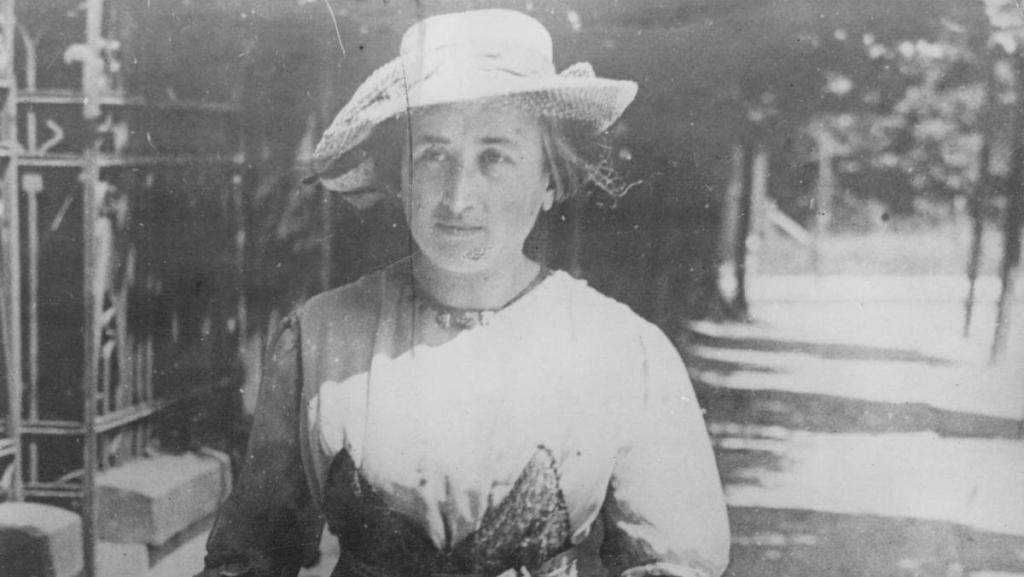
Red Rosa, Speaking in 1907

“The Revolution is magnificent. Everything else is bilge [Quark]”
(Rosa Luxemburg)

General information

Instructor

Here is more information about Prof. Lotz

Class Meetings

Days: MW
Time: 3:00 PM – 4:20 PM
Place: 102 Farrall Ag Eng Hall

Office

Phone: 517.355.4490 [dept.])
Place: 518 South Kedzie Hall
Hours: MW, 1pm-2:30pm, and by appointment

Other Contact

E-mail: lotz@msu.edu
Home Phone: please ask
Webpage: http://christianlotz.info

Box

You will find my box in the front office of the philosophy department (SK 503)

Schedule

Introduction

Aug 28, no class
ProfLotz is out of town

By Sep 4 read the following introductory essays: H. Arendt, A Heroine of Revolution, and J. Rose, Woman on the Verge of Revolution (pdfs on D2L); pay especially attention to the claim that Luxemburg was a person who “had no country.”

Sep 2, no class
Holiday

Sep 4, Introduction

From Totalitarianism to Political Freedom (Arendt)

Sep 9, Totalitarianism
Arendt, Ideology and Terror, pdf on D2L

Sep 11, Law, Power, Ruling
Arendt, Thinking without a Banister, 43-69

Sep 16, Authority
Arendt, Thinking without a Banister, 69-92

Sep 18, Marx
Arendt, Thinking without a Banister, 3-43

Sep 23, Marx
Arendt, Thinking without a Banister, 3-43

Sep 25, Freedom and Politics
Arendt, Thinking without a Banister, 220-243

Homework Weekend Assignment 1 (5)

Labor, Work, Action: The Human Condition (Arendt)

Sep 30, Social vs Political
Arendt, The Human Condition, Prologue+7-22

Oct 2, Social vs Political
Arendt, The Human Condition, 22-50

Homework Weekend Assignment 2 (+in-class assignment) (5)

Oct 7, Private and Public Realm
Arendt, The Human Condition, 50-79

Oct 9, Labor
Arendt, The Human Condition, 79-126

Oct 14, Making and Action
Arendt, The Human Condition, 175-192
Presentation: Dominick

Oct 16, Making and Action
Arendt, The Human Condition, 212-248
Presentation: Jaret

Politics, Revolution, Democracy (Luxemburg)

You should have Arendt’s Freedom and Politics, her concept of action, as well as her concept of public sphere in mind when you read Luxemburg; the page numbers refer to The Luxemburg Reader (eds. Hudis & Anderson)

Oct 21, Critique of Lenin and Centralism
Luxemburg, Organizational Questions of Russian Social Democracy, 248-266
Presentation: Taylor

Oct 23, Spontaneity and Political Action
Luxemburg, Organizational Questions of Russian Social Democracy, 248-266
Bring Arendt, Freedom and Politics

Oct 28, no class
ProfLotz is sick

Homework Weekend Assignment 3 (5)

Oct 30, no class
ProfLotz is out of town

Nov 4, Critique of Bolshevik Policies
Luxemburg, The Russian Revolution, 281-312
Presentation: Greg (for Arendt/Luxemburg focus on 299-312)

Nov 6, Anti-Nationalism and Democracy
Luxemburg, The Russian Revolution, 281-312
Bring Arendt, The Human Condition

Nov 11, No class
ProfLotz is out of town

Nov 13, Mass Strike
Luxemburg, The Mass Strike, the Political Party, and the Trade Unions, 168-200
Presentation: Jason

Nov 18, Mass Strike
Luxemburg, The Mass Strike, the Political Party, and the Trade Unions, 168-200
Luxemburg, Theory and Practice, section II-IV, 215-233

Revolution, Freedom, Council Democracy (Arendt)

Nov 20, The Freedom to Be Free
Arendt, Thinking without a Banister, 368-386
Presentation: Sasha

Nov 25, Revolution and Freedom & Council Democracy
Arendt, Thinking without a Banister, 332-355
Arendt, Thoughts on Politics and Revolution, pdf on D2L
Presentation: Alan

Nov 27, No class
Thanksgiving

Dec 2, Council Democracy
Arendt, Thinking without a Banister, 105-157, focus on 125-142 (devoted to the memory of Rosa Luxemburg)
Arendt, Thinking without a Banister, 157-159
Sitton, Arendt’s Argument for Council Democracy, pdf on D2L
Totschnig, Arendt’s argument for the council system: a defense, pdf on D2L

Dec 4, Wrap up

Dec 12,
Final paper due by 11:59pm via D2L dropbox

Course Description

Hannah Arendt, 1969

In this class we will try to figure out how to think properly about the political realm from a philosophical and general human point of view. We will facilitate this via studying one of the most important 20th Century figures in European political thought, namely, Hannah Arendt. We will read parts of a larger text written on Marx and one of her main books, The Human Condition. We will connect her position to the political thought of Rosa Luxemburg who was one of the most important political and intellectual figures in the left revolutionary and anti-war movement before WWII (she was killed by conservative military and government forces in 1918). Luxemburg, one of the most important women in the entire tradition of socialist left wing thought and action, is well known for her critique of Lenin’s top down approach to politics and revolution. She also tried to expand Marx’s theory of market expansion. Topics discussed in this class will be the essence of the political, the relation between labor, society, and the political, the concept of revolution, the concept of violence, the idea of council democracy, socialism and capitalism, and Arendt’s relation to left wing thought, as represented by Marx and Luxemburg.

Introductory Information

Note

This is a 400-level course in philosophy and, as such, contains difficult material and requires mature students. If you are not willing to study dense written material, listen to unusual lectures, and discuss ideas in an organized fashion, then you should not take this class. This class though can be taken by students without prior knowledge in philosophy. You should not take this class if you are not an avid reader.

Course Goals

This class should students introduce to

  • central issues in political philosophy
  • how to read major works of philosophy
  • how to think beyond a naturalisticlly and scientifically reduced world view
  • how to think critically about general conceptions of what it means to be political
  • how to conceptualize central aspects of the political, such as the difference between politics and the political, the difference between the social and the political, the relation between freedom and politics, and the role of revolution in modern political thought
  • how to think critically about the concept of democracy

Note

Students should be aware of the fact that this course is based on difficult texts. Accordingly, this class requires self-responsible learners and an intense confrontation with the primary text. Accordingly, if you are not excited about the prospect of a daily confrontation with abstract and historical reflections, then you should not take this class. This class is not based on a set of fixed knowledge and, as such, is not based on a behavioral idea of education; rather, we will try to learn together and critically examine the material. The instructor of this class does not have anything to teach, but much to learn.

Rosa Luxemburg (1871-1919)

“Those who do not move, do not feel their chains”
Rosa Luxemburg

Required Texts

  • Arendt, The Human Condition, U of Chicago Press (purchase)
  • Luxemburg, The Luxemburg reader, eds Hudis and Anderson, The Monthly review Press (purchase)
  • Arendt, Thinking without a Banister, Essays in Understanding 1953-1973, Schocken (purchase)
  • Arendt, On Rosa Luxemburg (pdf on D2L)
  • Arendt, On Revolution (no purchase necessary! Can be returned to book store!)
    Arendt, Power and Violence ( no purchase necessary! Can be returned to book store)

You should always bring the books/essays to class! Digital editions are not permitted.

Course Requirements

  • daily reading and studying (around 5-10 pages, up to 50 per week)
  • oral presentation + handout
  • 1 final essay assignment
  • homework assignments and spontaneous assignments in class; unannounced reading quizzes
  • participation

Note

The class and my lectures are solely based on the texts selected for class and require a thorough study and preparation of the material. I will primarily lecture on the readings, which will help you to more fully understand the texts. Therefore it is not sufficient for students to come to class without having prepared the texts. And indeed, in the assignments you have to demonstrate whether you have appropriately prepared the readings selected for each lecture.

Note

Every academic misconduct, such as plagiarism, will – without exception – lead to a failing grade in class. Check the Ombudsman’s page (see also note below on plagiarism):  https://www.msu.edu/~ombud/

Attendance

To get a good grade in this class, regular attendance is required. I will not call roll. Hence, it is up to you to come to class or not.However, if you do not come to class on a regular basis and participate in the class discussion, it is impossible for you to achieve a good grade in this class; so coming to class is your responsibility and your call. If you choose to attend class, please come on time, turn off cell phones and other electronic devices that interfere with your (and others’) concentration, have the reading prepared and be ready to participate. If you are not prepared, do not bother showing up. It is a sign of disrespect to your peers and the instructor to attend class unprepared. If you miss class, it is your responsibility to obtain class notes from a fellow student and to catch up on reading. Nevertheless, please be aware that you should not make me responsible for a failure that results out of your decision. You should be aware that chances to master this class are minimal, if you do not show up for class or if you do not prepare the readings (=studying).

Assignments

Oral Presentation (overview of assigned reading)

Each student has to prepare one oral presentation for class. The presentation should contain [a] a list of main points and claims, [b] concepts that are unclear, [c] intelligent questions about the readings. You should distribute a handout 2 days in advance.

Reading Quizzes

Given recent negative experience with student’s unwillingness to read and study primary material, I might assign reading quizzes. Questions might be passed out in advance. Quizzes cannot be made up (except in cases mentioned below).

Homework Assignments

From time to time I will send out via email weekend homework assignments; usually a short writing prompt in relation to either lecture or video material online, or in relation to our readings. Given that these homework assignments are always due on Sundays at 11:59pm, I will not accept late turn-ins. There is plenty of time for you to respond to the task, given that I usually send this out on time.

Unannounced Assignments

There might be – from time to time – spontaneously assigned group assignments in class. Students who do not attend class (and have no medical documentation) will lose all points.

Make-Up Assignments

Students who need to miss assignments for excusable reasons, such as a death in their families, MSU related business, emergency weather conditions, or medical reasons, must inform me ahead of time, and will be permitted to make up assignments. I will only accept official doctor notes (no faxes, no emails) or letters from other professors. Unfortunately I am unable to accept any other reasons than those mentioned.

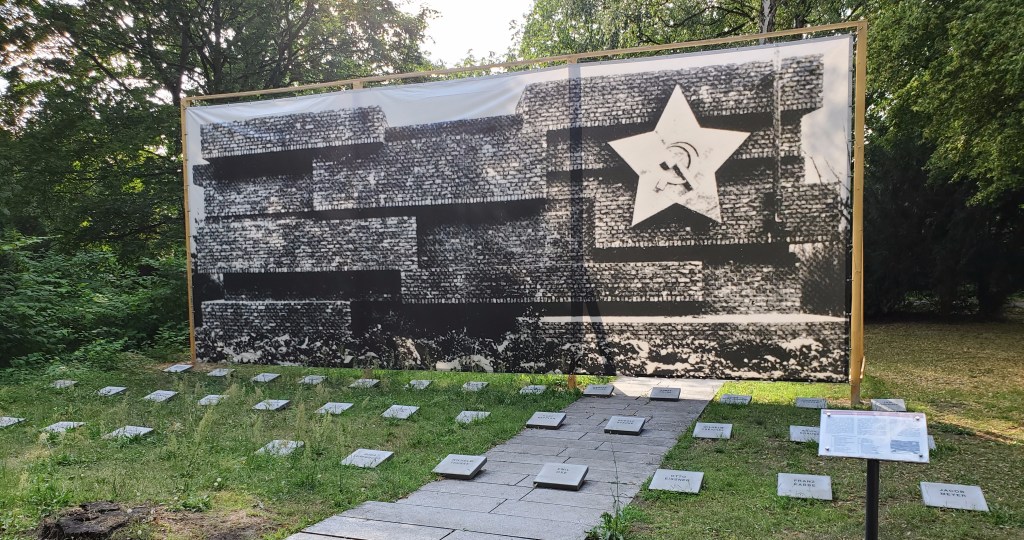
Mies van der Rohe’s Revolutionsdenkmal for Liebknecht and Luxemburg (1926, Zentralfriedhof Berlin); destroyed by the Nazis in 1935; reconstructed in 2019.

Course Evaluation

Assignments

1 final take-home assignment25 points
Participation20 points
Assignments (weekend, quizzes, in-class, etc)30 points
Oral presentation+handout25 points
 ——–
  100 points


Grading

4.0 (=A)100 – 93
3.592 – 87
3 (=B)86 – 82
2.581 – 77
2 (=C)76 – 72
1.571 – 65
1.0 (=D)64 – 60
0.0< 60

GENERIC SYLLABUS (might not be applicable to each class)

Laptop/Cell Phone/Tablet Policy

You are not permitted to use laptops or cell phones in class, unless needed for medical reasons. Flat devices, such as tablets, are permitted  if you have purchased the literature required for class electronically. Please do not text under the table. Cell phones should be removed from tables. Failure to follow this policy will lead to unannounced assignments in class or loss of points (at the digression of the instructor).

Class Attendance

As mentioned above, I do not employ in my classes a class attendance policy. Having said this, you should be aware that class attendance is very important. When engaging in a philosophical and humanistic dialogue it is necessary to be an active and present participant in the ongoing discussion. If you miss class please do not email me asking if you missed anything important. Every class is important. You should get a study buddy for the class; a student in class who will inform you of what you missed. If you miss a class you can come to my office hours or make an appointment to discuss the material, providing you have read the material and you simply want to see if your understanding of the material is on target. Time in office hours will not be used to repeat the class lectures.

Grading Criteria + Paper Writing Tips

Check out this page for grading criteria, example of assignments, etc.

Online Research Sources

Unfortunately, some people think that the internet as such is a reliable source of information. If you decide to use online sources for additional information or your paper then do not just use one of the common internet search engines, such as Google; rather, use reliable academic sources, such as Britannica Online, or the Stanford Encyclopedia of Philosophy. The Internet Ecyclopedia of Philosophy isn’t very good, but still acceptable. Check out MSU’s library resources! And, as with other sources, you must cite any online sources to which you refer in your essay.

Writing Center Information

MSU’s writing center offers excellent help on all matters regarding writing and learning. Check the website at http://writing.msu.edu for an overview and hours. For more information, please call 517.432.3610 or send an e-mail to writing@msu.edu.

Grief Absence Policy

I follow MSU’s general grief absence policy, which can be found here.

Integrity of Scholarship and Grades (Plagiarism)

The following statement of University policy addresses principles and procedures to be used in instances of academic dishonesty, violations of professional standards, and falsification of academic or admission records, herein after referred to as academic misconduct. [See General Student Regulation 1.00, Protection of Scholarship and Grades.]

Academic Honesty

Article 2.3.3 of the Academic Freedom Report states that “The student shares with the faculty the responsibility for maintaining the integrity of scholarship, grades, and professional standards.” In addition, the (insert name of unit offering course) adheres to the policies on academic honesty as specified in General Student Regulations 1.0, Protection of Scholarship and Grades; the all-University Policy on Integrity of Scholarship and Grades; and Ordinance 17.00, Examinations. (See Spartan Life: Student Handbook and Resource Guide and/or the MSU Web site: www.msu.edu) Therefore, unless authorized by your instructor, you are expected to complete all course assignments, including homework, lab work, quizzes, tests and exams, without assistance from any source. You are expected to develop original work for this course; therefore, you may not submit course work completed for another course to satisfy the requirements for this course. Students who violate MSU rules may receive a penalty grade, including but not limited to a failing grade on the assignment or in the course. Contact your instructor if you are unsure about the appropriateness of your course work. (See also https://www.msu.edu/~ombud/)

Plagiarism, from the Ombudsman’s page

Plagiarism (from the Latin plagiarius, an abductor, and plagiare, to steal) is defined by the White House Office of Science and Technology Policy on Misconduct in Research (take that!) as “ . . . the appropriation of another person’s ideas, processes, results or words without giving appropriate credit.”

Accidental or Unintentional
One may not even know that they are plagiarizing.  It is the student’s responsibility to make certain that they understand the difference between quoting and paraphrasing, as well as the proper way to cite material.

Blatant
Here, students are well aware that they are plagiarizing.  Purposefully using someone else’s ideas or work without proper acknowledgment is plagiarism.  This includes turning in borrowed or bought research papers as one’s own.

Self
Turning in the same term paper (or substantially the same paper) for two courses without getting permission from one’s instructor is plagiarism.

The Spartan Code of Honor

Student leaders have recognized the challenging task of discouraging plagiarism from the academic community. The Associated Students of Michigan State University (ASMSU) is proud to be launching the Spartan Code of Honor academic pledge, focused on valuing academic integrity and honest work ethics at Michigan State University. The pledge reads as follows:

“As a Spartan, I will strive to uphold values of the highest ethical standard. I will practice honesty in my work, foster honesty in my peers, and take pride in knowing that honor is worth more than grades. I will carry these values beyond my time as a student at Michigan State University, continuing the endeavor to build personal integrity in all that I do.”

The Spartan Code of Honor academic pledge embodies the principles of integrity that every Spartan is required to uphold in their time as a student, and beyond. The academic pledge was crafted with inspiration of existing individual college honor codes, establishing an overarching statement for the entire university. It was formally adopted by ASMSU on March 3, 2016, endorsed by Academic Governance on March 22, 2016, and recognized by the Provost, President, and Board of Trustees on April 15, 2016.

SIRS Evaluations

Michigan State University takes seriously the opinion of students in the evaluation of the effectiveness of instruction and has implemented the Student Instructional Rating System (SIRS) to gather student feedback (https://sirsonline.msu.edu). This course utilizes the online SIRS system, and you will receive an e-mail during the last two weeks of class asking you to fill out the SIRS web form at your convenience. In addition, participation in the online SIRS system involves grade sequestration, which means that the final grade for this course will not be accessible on STUINFO during the week following the submission of grades for this course unless the SIRS online form has been completed. Alternatively, you have the option on the SIRS website to decline to participate in the evaluation of the course. We hope, however, that you will be willing to give us your frank and constructive feedback so that we may instruct students even better in the future. If you access the online SIRS website and complete the online SIRS form or decline to participate, you will receive the final grade in this course as usual once final grades are submitted.

Social Media and Sharing of Course Materials

As members of a learning community, students are expected to respect the intellectual property of course instructors. All course materials presented to students are the copyrighted property of the course instructor and are subject to the following conditions of use:

  1. Students may record lectures or any other classroom activities and use the recordings only for their own course-related purposes.
  2. Students may share the recordings with other students enrolled in the class. Sharing is limited to using the recordings only for their own course-related purposes.
  3. Students may post the recordings or other course materials online or distribute them to anyone not enrolled in the class with the advance written permission of the course instructor and, if applicable, any students whose voice or image is included in the recordings.
  4. Any student violating the conditions described above may face academic disciplinary sanctions.

Student Support Program (SSP)

Michigan State University is offering all MSU students access to counseling support 24/7/365 through My SSP: Student Support Program. My SSP is free to all MSU students. My SSP is confidential, and can help with:

  • Adapting to new challenges
  • Being successful at school
  • Relationships with friends and family
  • Practical issues with studying
  • Stress, sadness, loneliness, and more

The My SSP professional counselors are available to help anytime, anywhere with:

  • Immediate support by phone and chat
  • Ongoing support by appointment via phone and video
  • In addition, culturally relevant support is available in the language of the caller’s choice.

There are multiple options for connecting with a My SSP counselor:

  • Download the free My SSP app on Google Play or iTunes
  • Chat online at http://us.myissp.com
  • Call 1-866-743-7732
  • From outside North America, call 001.416.380.657

Accommodations for Students with Disabilities

Students with disabilities should contact the Resource Center for Persons with Disabilities to establish reasonable accommodations. For an appointment with a counselor, call 353-9642 (voice) or 355-1293 (TTY)

Drops and Adds

The last day to add this course is the end of the first week of classes. The last day to drop this course with a 100 percent refund and no grade reported is (see Academic Calendar). The last day to drop this course with no refund and no grade reported is (see Academic Calendar). You should immediately make a copy of your amended schedule to verify you have added or dropped this course.

Note on Attendance

Students who fail to attend the first four class sessions or class by the fifth day of the semester, whichever occurs first, may be dropped from the course.